
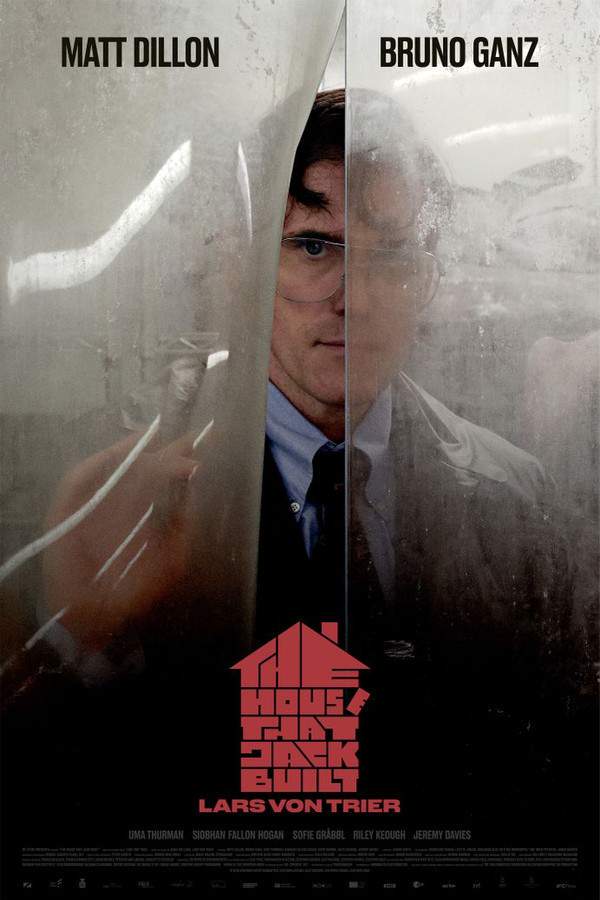
The House That Jack Built 2018

Directed by

Lars von Trier
Made by

IFC Films
The House That Jack Built Plot Summary
Read the complete plot summary and ending explained for The House That Jack Built (2018). From turning points to emotional moments, uncover what really happened and why it matters.
The narrative centers on Jack, a serial killer with an artistic flair, as he operates over a span of twelve years, showcasing the evolution of his heinous acts. Throughout this journey, he engages in philosophical dialogues with Verge, delving into themes of ethics and his own worldview.
1st Incident
While driving, Jack (portrayed by Matt Dillon) encounters a woman, Lady 1, stranded due to car trouble. As they share light-hearted banter, she jokingly insinuates he could be a serial killer. Agreeing to assist her, he takes her to his mechanic, Sonny. Despite fixing her tire jack, it falters again during their attempt to get the car running. As she requests another ride, Jack seizes the opportunity; he uses the tire jack to murder her before concealing her body within an industrial freezer he had secured just for such purposes. The woman’s car is hidden partially out of sight in the bushes, lying in a secluded area where the police remain oblivious, lucky enough that it sits on the border of two states – an area often ignored.
2nd Incident
Jack adopts a new guise and knocks on the door of another woman, Lady 3, claiming to be a police officer with information regarding her deceased husband’s pension. As the situation escalates, he poses as an insurance agent, offering her enticing cash promises. After luring her in, he chokes her but isn’t able to finish the job initially. When she awakens, he offers her a glass of water with disintegrated donuts in hopes of inducing choking, but to no avail. He ultimately resorts to strangulation before stabbing her directly in the heart. As the police become suspicious, represented by Ed Speleers, Jack hastily wraps her corpse and drags it to the freezer, leaving behind a gruesome trail of blood that, by sheer chance, the rain washes away later that night.
3rd Incident
In a chilling episode, Jack takes his girlfriend Jacqueline, along with her two sons, Grumpy and George, for a deceptive hunting lesson. In a calculated move, he murders the boys from a distance using a sniper rifle. Continuing his gruesome spree, he ultimately kills their mother and, leveraging his taxidermy skills, alters Grumpy’s face into a grotesquely eternal smile.
4th Incident
After meeting Jacqueline (played by Riley Keough), whom Jack dubbed “Simple” due to his perception of her naivety, he fabricates tales of his murderous exploits, claiming to have killed sixty people as the notorious “Mr. Sophistication.” Though she dismisses it as a mere boast, he makes his intentions clear by marking her with red circles, ultimately leading to her brutal demise. His depravity knows no bounds, as he goes so far as to sever and display one of her breasts on a police car, crafting the other into a grotesque wallet.
5th Incident
Jack finds himself orchestrating a macabre assembly, detaining six victims tied up in a row, intending to take them all out with a single bullet. However, misfortune hits as he discovers the bullets procured from Al aren’t suitable. Desperation drives him to a man named S.P. ([David Bailie]), with whom he has a lethal encounter, ultimately acquiring the necessary bullet. In a moment of dark irony, he dons S.P.’s red bathrobe, hoping to elude the police who are closing in. Once captured, he embarks on a violent path while constructing a makeshift house out of bodies, mirroring the chaos in his mind.
Epilogue: Katabasis
Echoing Dante’s Inferno, Verge, who is revealed to be Virgil, guides Jack through branches of Hell. In a climactic moment, Jack discovers a broken bridge leading away from the depths of despair, while Verge warns him against the risks of navigating the treacherous cliffs. Ignoring the sage advice, Jack attempts the perilous climb but ultimately plummets into the fiery depths below, sealing his fate in a world forged by his own monstrous decisions.
The House That Jack Built Timeline
Follow the complete movie timeline of The House That Jack Built (2018) with every major event in chronological order. Great for understanding complex plots and story progression.
First Encounter with Lady 1
Jack meets a stranded woman, known as Lady 1, while driving. They share light-hearted conversation, but Jack's sinister intentions come to light when he helps her under the pretense of a mechanic, ultimately leading to her brutal murder.
Murder of Lady 1
Using a tire jack, Jack kills Lady 1 and stores her body in an industrial freezer. The secluded nature of the location keeps her disappearance under wraps, as law enforcement remains oblivious to his crime.
Deception of Lady 3
Adopting a new disguise, Jack approaches another woman, Lady 3, claiming to be a police officer. As the situation escalates, he cunningly lures her into a trap, revealing his true nature through deception and violence.
Strangulation of Lady 3
After an initial struggle, Jack resorts to choking Lady 3 before fatally stabbing her. As police grow suspicious, he hastily disposes of her body while the rain unwittingly cleans up his bloody tracks.
Murder of Jacqueline and Her Sons
Jack invites his girlfriend Jacqueline and her two sons under the guise of teaching them to hunt. Instead, he savagely murders the boys from a distance and ultimately drives a dagger into Jacqueline, highlighting his ruthless nature.
Jack's Confession to Jacqueline
After meeting Jacqueline, Jack boasts about his supposed murderous exploits, claiming to be the infamous 'Mr. Sophistication.' His obsession with depicting violence, marked by red circles around her, foreshadows her tragic fate.
Brutal Display of Jacqueline's Body
Jack's depravity reaches new heights when he severly mutilates Jacqueline's body post-murder. In a grotesque display, he attaches her breast to a police car, showcasing the unfathomable depths of his madness.
The Intended Massacre
In a brooding moment, Jack manages to capture six victims, planning to execute them with a single bullet. As he attempts to secure ammunition, he realizes that his preparation is insufficient, setting the stage for chaos.
Acquisition of Bullets
Desperately seeking bullets, Jack meets with S.P. and engages in a deadly conflict. Although he acquires the necessary ammunition, his violent tendencies attract unwanted police attention.
Final Capture and Body House
As law enforcement closes in, Jack dons S.P.'s red bathrobe in a futile attempt to escape. Ultimately captured, he spirals into further madness while constructing a grotesque house out of his victims’ bodies.
Journey Through Hell
In the epilogue, Verge, representing Virgil, guides Jack through a hellish landscape. The allegorical journey showcases Jack's reflective descent as he confronts the consequences of his heinous actions.
The Broken Bridge
During their trek, Jack discovers a precarious broken bridge that leads away from his despair. Despite Verge's warnings, he recklessly ventures forth, symbolizing his reckless disregard for life and consequence.
Plunge into Hell
Defying warnings, Jack attempts to climb the treacherous cliffs but ultimately slips, descending into the fiery depths. This act seals his faith in the hell he has created through his monstrous decisions.
The House That Jack Built Characters
Explore all characters from The House That Jack Built (2018). Get detailed profiles with their roles, arcs, and key relationships explained.
Jack (Matt Dillon)
Jack is a charismatic and intelligent serial killer who harbors a twisted belief in his artistic vision of murder. He displays a disturbing mix of charm and brutality, engaging in philosophical dialogues while executing heinous crimes. His character evolves from a seemingly relatable outsider to a monstrous figure, embodying the darkest aspects of human nature.
Verge (Bruno Ganz)
Verge serves as Jack's philosophical counterpart, guiding him through discussions of ethics and morality. He embodies a parental figure, trying to steer Jack towards understanding the weight of his actions. Verge's character represents the contrasting moral compass amidst Jack's moral decay.
Jacqueline (Riley Keough)
Jacqueline, referred to as 'Simple' by Jack, is portrayed as naive yet drawn into Jack’s dark world. Her tragic fate at the hands of Jack emphasizes the loss of innocence and the consequences of his manipulation. Her character serves to highlight Jack's monstrous ability to deceive and harm those closest to him.
Lady 1 (Uma Thurman)
Lady 1 is portrayed as a witty and unsuspecting woman who becomes one of Jack's first victims. Her playful banter with Jack just before her tragic demise highlights the irony of her situation. Her character serves to showcase Jack's chilling ability to manipulate and ultimately destroy those who trust him.
Al (Jeremy Davies)
Al is an accomplice who unwittingly assists Jack in his violent endeavors. His character represents the sometimes blind allegiance individuals may have toward those they trust. Al's involvement underscores the enablers of violence present in society, albeit indirectly.
The House That Jack Built Settings
Learn where and when The House That Jack Built (2018) takes place. Explore the film’s settings, era, and how they shape the narrative.
Time period
Over a span of twelve years
The narrative unfolds over twelve years, emphasizing the gradual evolution of Jack's criminal mind and artistic façade. This time frame highlights both the calculated nature of his murders and the philosophical introspection he engages in with Verge. The timeline serves to accentuate the increasing sophistication of his methods and his moral degradation.
Location
A secluded area at the border of two states, Jack's home, Hell
The movie primarily takes place in a secluded area, where Jack commits his crimes, taking advantage of the area's obscurity to evade detection. His home serves as a grim backdrop to his heinous acts, becoming a chilling testament to his twisted psyche. The epilogue transitions into Hell, where Jack's descent reflects his moral and spiritual downfall.
The House That Jack Built Themes
Discover the main themes in The House That Jack Built (2018). Analyze the deeper meanings, emotional layers, and social commentary behind the film.
😈
Morality
The film delves into moral philosophy, questioning the nature of good and evil through Jack's interactions with Verge. Jack's justifications for his brutal actions serve as a vehicle for exploring complex ethical dilemmas. Ultimately, the film poses challenging inquiries into the human condition and the possible justifications for heinous acts.
🔪
Violence
Violence is a central theme, vividly depicted through Jack's gruesome acts against his victims. The film examines the cold brutality of his actions, contrasting his perceived artistic sensibility with the stark reality of his crimes. This theme underscores the horror of desensitization to violence and the repercussions of such malevolent behaviors.
🚪
Descent
Jack's journey represents a descent into madness, showcasing his gradual transformation into a serial killer. This theme is mirrored in the physical and metaphorical descent into Hell, exploring the consequences of one's choices. The culmination of his actions leads to existential reflections on fate and the inescapability of one's moral failures.

The House That Jack Built Ending Explained
Unravel the ending of The House That Jack Built (2018) with our detailed explanation. Understand the final scenes, character fates, and unresolved questions.
In the climax of The House That Jack Built, Jack’s descent into hell mirrors the structure of Dante’s Inferno, where he is guided through different levels of torment. As Jack tries to escape capture, he encounters a mysterious figure called Verge, who is trapped in a freezer in Jack’s basement. Verge encourages Jack to create a gruesome “house” out of all the corpses he has accumulated over the years, symbolizing his own twisted conception of art and order from chaos. After constructing this horrific structure, Jack follows Verge into a hole beneath the house as police storm his home, leading to his downfall.
The journey with Verge takes Jack deeper into hell, to a place beyond the usual circles of punishment. Verge eventually leads him onto a broken bridge suspended over the abyss itself. Jack notices a stairway that supposedly leads to heaven, and in a moment of desperation or hope, he tries to cross it. However, his attempt ends in failure as he slips and disappears into the darkness below, symbolizing his ultimate fall from grace and escape from redemption. The film ends with the tune “Hit The Road Jack” playing over the credits, leaving his fate unresolved but emphasizing the tragic and nihilistic tone of the story. Overall, the ending suggests that Jack’s obsession with his own artistic vision and his moral depravity have condemned him to an eternal journey in hell, with only the fleeting hope of salvation slipping away just out of reach.
The House That Jack Built Spoiler-Free Summary
Discover the spoiler-free summary of The House That Jack Built (2018). Get a concise overview without any spoilers.
In a stark, snow‑capped landscape that feels both hyper‑real and nightmarishly familiar, Jack drifts through a world where everyday banality collides with a twisted sense of artistry. He moves with the confidence of a performer, turning each interaction into a silent performance that hints at a deeper, obsessive compulsion. The film’s tone embraces a bleak humor, letting the absurdity of his perspective shine through as the scenery itself becomes a canvas for his unsettling musings.
The story is anchored by Jack’s constant, almost Socratic dialogues with a enigmatic figure known as Verge, who serves as both confidant and reluctant guide. Their conversations thread through philosophy, ethics, and the nature of creation, providing a cerebral counterpoint to the visceral atmosphere that surrounds the protagonist. As he navigates relationships, encounters strangers, and brushes against the fringes of society, the film paints a portrait of a man who sees violence as an extension of the artistic process, blurring the line between creator and destroyer.
Layered with striking visual motifs and a soundtrack that oscillates between eerie silence and dissonant chords, the movie invites the audience to contemplate the fine balance between beauty and brutality. It sets up a world where every ordinary moment carries the weight of potential revelation, and where Jack’s inner turmoil and external charisma keep viewers teetering between fascination and revulsion. The narrative promises a thought‑provoking journey that explores the darkness lurking beneath the veneer of art, leaving the true extent of his ambitions tantalizingly out of reach.
Movies with Similar Twists and Themes
Uncover films that echo the narrative beats, emotional arcs, or dramatic twists of the one you're exploring. These recommendations are handpicked based on story depth, thematic resonance, and spoiler-worthy moments — perfect for fans who crave more of the same intrigue.




Featured on this page

What's After the Movie?
Not sure whether to stay after the credits? Find out!




Explore Our Movie Platform
New Movie Releases (2025)
Famous Movie Actors
Top Film Production Studios
Movie Plot Summaries & Endings
Major Movie Awards & Winners
Best Concert Films & Music Documentaries
Movie Collections and Curated Lists
© 2025 What's After the Movie. All rights reserved.