
Breathing 2012

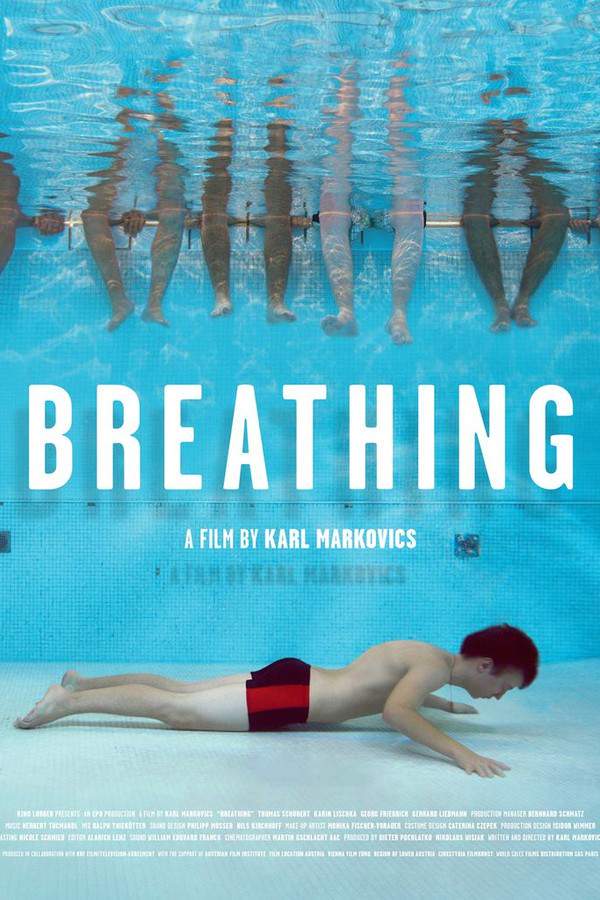
A young man with a history of offenses finds himself working a series of low-paying jobs as part of a rehabilitation program. While performing tasks at a local undertaker's, he develops an unexpected connection with the deceased, leading him to discover a sense of purpose and offering a path toward finding acceptance and a new beginning.

Does Breathing have end credit scenes?
No!
Breathing does not have end credit scenes. You can leave when the credits roll.
Meet the Full Cast and Actors of Breathing
Explore the complete cast of Breathing, including both lead and supporting actors. Learn who plays each character, discover their past roles and achievements, and find out what makes this ensemble cast stand out in the world of film and television.


External Links and Streaming Options
Discover where to watch Breathing online, including streaming platforms, rental options, and official sources. Compare reviews, ratings, and in-depth movie information across sites like TMDb, Wikipedia, Rotten Tomatoes or Metacritic.







Ratings and Reviews for Breathing
See how Breathing is rated across major platforms like IMDb, Metacritic, and TMDb. Compare audience scores and critic reviews to understand where Breathing stands among top-rated movies in its genre.

66
Metascore
8.4
User Score


90%
TOMATOMETER

77%
User Score

67
%
User Score
Take the Ultimate Breathing Movie Quiz
Challenge your knowledge of Breathing with this fun and interactive movie quiz. Test yourself on key plot points, iconic characters, hidden details, and memorable moments to see how well you really know the film.
Breathing (2012) Quiz: Test your knowledge of the Austrian drama *Breathing*, which follows 19‑year‑old Roman Kogler during the weeks leading up to his parole hearing and his work at a mortuary.
What is the name of the young prisoner at the centre of the film?
Full Plot Summary and Ending Explained for Breathing
Read the complete plot summary of Breathing, including all major events, twists, and the full ending explained in detail. Explore key characters, themes, hidden meanings, and everything you need to understand the story from beginning to end.
Roman Kogler Thomas Schubert is a 19-year-old prisoner in an Austrian juvenile detention center, and the film follows roughly two weeks leading up to his parole hearing. During this period he begins a trial month at a mortuary, a job that counts as a crucial qualification for his release. Kogler remains present in almost every scene, and the story traces his quiet, inward emotional shift through a combination of facial expressions, body language, stark visuals, and restrained dialogue. At the outset he is sullen and isolated—cut off from fellow inmates, from the earnest probation counselor who tries to help him, from the guards, and from his new coworkers. As the days pass, a stubborn, almost indifferent resilience keeps him going, yet small, ordinary moments gradually spark a change: a slow awakening of curiosity about his past and a renewed interest in forming humane connections.
The film opens with Roman interviewing for a job at a metal-working factory, where he lies about his welding skills to the foreman. When a welder’s mask is placed on his face, he recoils with a stifled scream. The subsequent sequence grows stark: a bleak road stretching to the horizon, then a car approaching, and Roman stepping into the car after a sudden, decisive movement. The car is driven by Walter Fakler Georg Friedrich, the probation counselor who has come to collect him after the metalworking fiasco. In the car, Roman’s sullen defiance is met with Fakler’s earnest but tiring insistence on responsibility. Back at prison, Fakler hands him a newspaper and urges him to look through the want ads, insisting they’ll meet again on Monday.
What follows is a relentless cadence of institutional routines. A routine strip search greets Roman each time he returns to his cell, conducted with clinical efficiency by a guard and an assistant. The day ends with the heavy doors of the cells sealing shut, leaving him alone in the quiet corridor. A singular recreational outlet is introduced: a visit to the indoor swimming pool where Roman, unlike the other boys, dives in and swims laps in quiet isolation. This scene repeats itself with slight variations, underscoring his detachment from the social world around him. Each workday he travels by train into Vienna, passing a billboard that promises “Tauchen Sie ein Ins Abenteuer”—an advertisement for adventure that mirrors his own tentative plunge into unfamiliar territory.
The mortuary where he works—Vienna’s large Bestattung Wien—places him among the routine movement of corpses from death to burial. At first he is assigned to observational tasks, watching as co-workers handle the delicate, sometimes unsettling work. His initial reaction is visceral disgust, and a coworker’s hostility adds friction to the early days. In a moment of quiet, Roman works alone in a small room, removing the cases used to transport corpses from a steam-cleaning machine; a small bird startles him, and he opens a door to set the bird free, a brief act of mercy that sits oddly within the mechanical world of the mortuary. The door bears the label “Notausgang” (Emergency Exit), a small detail that resonates with the film’s themes of escape and possibility.
A pivotal turn occurs when Roman encounters the naked corpse of a young woman who shares his surname. Panic shoots through him at the thought that this could be his mother, but he confirms the corpse is not her. This moment sets in motion a search that leads Roman to his mother’s neighborhood, and he eventually tracks her down to an IKEA store, where she lies on a bed as if resting in death. They reconnect, and he tells her he is now a diving instructor and headed to New Zealand, a line that nods to the subway advertisement they pass on the way. Back at her flat, their conversation is tense and intimate: he asks why she gave him up, and she responds with a bitter candor, declaring that letting him go was the best thing she did. She also confronts him about his work, revealing her knowledge of his occupation as an undertaker. The confrontation ends with a confession from her: the real reason she gave him up was that, as a baby, she had once tried to suffocate him to stop his crying.
The film’s final beat returns to the parole arc. After the hearing, Roman steps out into the world with a mixed sense of relief and ongoing weight, and the final image is his quiet, solitary visit to the grave of the teenage victim—a somber bookend to a life lived in the margins of institutional life and the mortuary world.
Throughout, the storytelling relies on restraint and implication. The audience is invited to read emotion in the smallest details—glances, posture, and the rhythm of daily routines—creating a portrait of a young man whose interior life begins to wake up to the possibility of empathy, connection, and a future beyond confinement. The film remains intimate, observational, and unsentimental, offering a humane meditation on guilt, memory, and the slow, arduous path toward understanding one’s own past.

Watch Trailers, Clips & Behind-the-Scenes for Breathing
Watch official trailers, exclusive clips, cast interviews, and behind-the-scenes footage from Breathing. Dive deeper into the making of the film, its standout moments, and key production insights.
Breathing Other Names and Titles
Explore the various alternative titles, translations, and other names used for Breathing across different regions and languages. Understand how the film is marketed and recognized worldwide.
Quick Links: Summary, Cast, Ratings, More

What's After the Movie?
Not sure whether to stay after the credits? Find out!




Explore Our Movie Platform
New Movie Releases (2025)
Famous Movie Actors
Top Film Production Studios
Movie Plot Summaries & Endings
Major Movie Awards & Winners
Best Concert Films & Music Documentaries
Movie Collections and Curated Lists
© 2025 What's After the Movie. All rights reserved.