
Tabu 2012

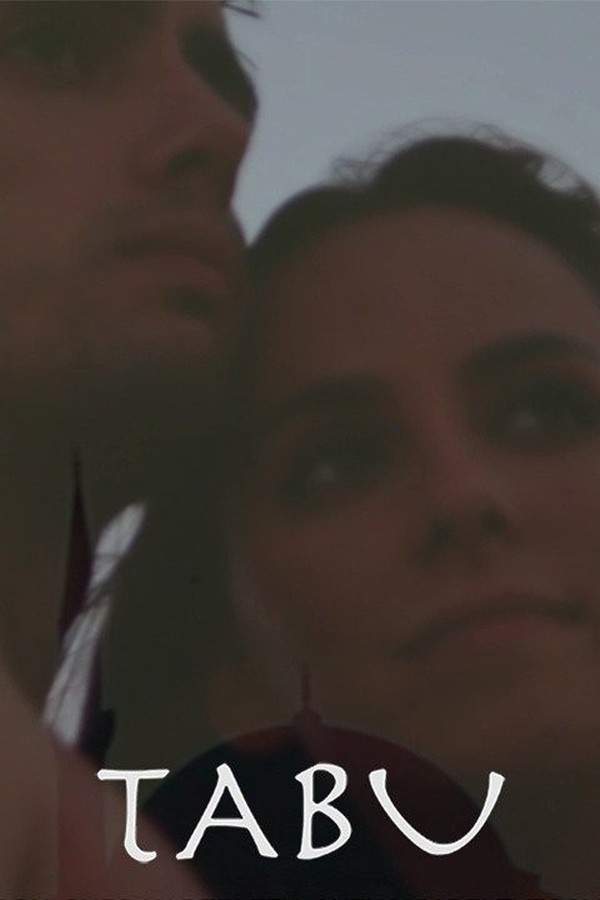
Amidst growing cultural tensions, David and Leyla, an Armenian man and a Turkish woman, find their love forbidden by societal divides. Their passionate relationship unfolds against a backdrop of conflict, forcing them to confront difficult choices and make profound sacrifices as they navigate a world determined to keep them apart.


Does Tabu have end credit scenes?
No!
Tabu does not have end credit scenes. You can leave when the credits roll.
Meet the Full Cast and Actors of Tabu
Explore the complete cast of Tabu, including both lead and supporting actors. Learn who plays each character, discover their past roles and achievements, and find out what makes this ensemble cast stand out in the world of film and television.
No actors found
External Links and Streaming Options
Discover where to watch Tabu online, including streaming platforms, rental options, and official sources. Compare reviews, ratings, and in-depth movie information across sites like IMDb, TMDb, Wikipedia or Rotten Tomatoes.









Ratings and Reviews for Tabu
See how Tabu is rated across major platforms like IMDb, Metacritic, and TMDb. Compare audience scores and critic reviews to understand where Tabu stands among top-rated movies in its genre.

79
Metascore
6.4
User Score

7.3 /10
IMDb Rating

70
%
User Score

3.9
From 182 fan ratings
Take the Ultimate Tabu Movie Quiz
Challenge your knowledge of Tabu with this fun and interactive movie quiz. Test yourself on key plot points, iconic characters, hidden details, and memorable moments to see how well you really know the film.
Tabu (2012) Quiz: A mixed‑difficulty quiz covering characters, plot points, and themes from the film Tabu (2012).
Which elderly woman lives on a thin pension in the Lisbon boarding house?
Full Plot Summary and Ending Explained for Tabu
Read the complete plot summary of Tabu, including all major events, twists, and the full ending explained in detail. Explore key characters, themes, hidden meanings, and everything you need to understand the story from beginning to end.
The film frames its slow, poetic meditation with a voiceover by Miguel Gomes, who reads a legend-like text that blends myth with memory. In this legend, the Creator orders things to unfold, yet the human heart often drags events into territories no design could fully anticipate: a solitary explorer in Africa, long ago, leaps into a river after the death of his beloved, only to be devoured by a crocodile. Over time, people say they have glimpsed a sad crocodile and a woman dressed in old-fashioned clothes on the riverbank, and there is a sense that the two share a strange, unspoken bond. The voiceover invites us to listen for the echoes of a fate that seems both inevitable and intimate, as if a legend itself were watching over a very human drama.
Back in Lisbon, the camera settles on an old building where three disparate women inhabit its aging rooms. Aurora, an octogenarian living on a slender pension, is eccentric, talkative, and steeped in superstition. Santa, her housemaid from Cape Verde, moves with quiet presence and an unusual talent for divination and the subtle art of voodoo, though she is semi-literate. Their neighbor and friend, Pilar, is middle-aged, Catholic, and fiercely active in social causes, always ready to intervene in others’ lives to shape a better world. The three women form a fragile, interwoven circle where concern, superstition, and care jostle against loneliness and the sense that time is thinning the edges of their days.
Pilar has another friend—the romantic, somewhat skeptical painter who brings color and tension to these lives by insisting on offering her art as a token of affection. But Pilar’s own attention keeps returning to Aurora, to the older woman’s solitary routines, to the long, almost ritualized visits she makes to the casino, and to the quiet rifts that seem to widen whenever Santa’s quiet presence is felt. Aurora, meanwhile, feels an ache that goes beyond the ordinary ache of aging: she senses that someone is missing her, a figure her friends have never heard about, a person named Gian-Luca Ventura. This absence is not merely emotional; it is almost metaphysical, a missing thread that slowly knots the fabric of her days. She asks Pilar to find this man, and Pilar succeeds, though the news that Aurora has died soon after reaches them like a somber wind.
The search for Gian-Luca brings us into another narrative layer, one voiced by the man himself. Gian-Luca is an old man who once lived in Mozambique, a country then still marked by colonial conflict and upheaval. He becomes the conduit for Aurora’s past, and his voiceover carries us to the telling of her life in Africa during the 1960s. Aurora and her husband run a tea farm on the slopes of Mount Tabu, a place where the land is steeped in memory and danger. She is portrayed as a capable hunter, never missing a shot, a woman of grit who has carved out a space for herself in a world that often favors strength over tenderness. The couple also keeps a small crocodile as a pet—a gift from her husband that becomes a symbol of both wildness and control.
The animal’s disappearance becomes the hinge of the story. The crocodile slips away, and the pregnant Aurora, guided by a fierce instinct, discovers it in a house belonging to Gian-Luca Ventura. What follows is a passionate, dangerous affair between Aurora and Gian-Luca, a convergence of longing and risk that intensifies as the pregnancy advances. Gian-Luca confides the affair to his friend Mario, a decision that sets in motion a chain of conflicts. Mario, seeing a threat to his own standing and perhaps to the moral order he believes in, demands that Gian-Luca end the relationship. When Gian-Luca refuses, a violent confrontation erupts, and Aurora, heavily pregnant, grabs a revolver and shoots Mario.
This act—so charged with guilt, fear, and the weight of possible discovery—has consequences that ripple forward in history as much as in family life. The killing is soon wrapped in the language of political necessity: it is presented as, or at least used as, a pretext to ignite the Portuguese Colonial War, a choice that places Aurora’s personal transgression within a grand, brutal machinery of empire and conflict. The murder is not at once solved or forgotten; instead, it becomes part of the story Aurora tries to carry, even as she gives birth to a daughter in the shadow of the violence around her.
Aurora writes a final letter to Gian-Luca—an act that encapsulates both longing and guilt—and then, two days later, Gian-Luca leaves Africa for good. He moves to India, and years pass before he learns of the death of Aurora’s husband. Eventually, Gian-Luca moves to Lisbon and finally makes his address known to Aurora, only to receive no reply. The distance becomes a choice of sorts: he decides not to pursue her further, explaining that he respected her wishes and burned her final letter, which spoke of her guilt for Mario’s murder and her plea for him to depart Africa.
In the Lisbon present, the thread of this history lingers in the air between the three women. Pilar’s concern for Aurora’s solitude expands into a broader meditation on memory, guilt, and the ways in which past lives insist on being seen. The elder Aurora’s legend—of a hunter, of a crocodile, of a love that could not be contained by either law or custom—hovers over the present like a quiet, unresolved weather system. The tale slows down to observe how a haunted past can seep into ordinary days, coloring them with a mixture of tenderness and danger.
Throughout, the film keeps a measured, almost ceremonial rhythm. The voiceover by Miguel Gomes threads the two timelines together with a patient, reflective cadence, inviting us to listen for the emotional truth behind each gesture—the look shared between Aurora and her husband when the crocodile first became a symbol, the dangerous heat of the Africa days that gave rise to a life-altering choice, and the quiet resilience of the Lisbon women who carry these memories forward without knowing exactly where they will lead. The result is a work that feels both intimate and expansive, a mosaic of private passions and public histories that asks us to consider how a single life can echo across continents and decades.
In the end, the story refuses to pretend that every wound can be neatly explained or absolved. It respects the complexity of love and guilt, the stubborn persistence of memory, and the way legends—whether whispered by an old woman on a riverbank or spoken aloud by a narrator—continue to shape the present, long after the events themselves have passed into history. The crocodile’s sorrowful legend remains a quiet companion to the human drama in Lisbon, a reminder that some attachments endure across time in ways we may never fully understand.

Watch Trailers, Clips & Behind-the-Scenes for Tabu
Watch official trailers, exclusive clips, cast interviews, and behind-the-scenes footage from Tabu. Dive deeper into the making of the film, its standout moments, and key production insights.
Cars Featured in Tabu
Explore all cars featured in Tabu, including their makes, models, scenes they appear in, and their significance to the plot. A must-read for car enthusiasts and movie buffs alike.
Tabu Themes and Keywords
Discover the central themes, ideas, and keywords that define the movie’s story, tone, and message. Analyze the film’s deeper meanings, genre influences, and recurring concepts.
Tabu Other Names and Titles
Explore the various alternative titles, translations, and other names used for Tabu across different regions and languages. Understand how the film is marketed and recognized worldwide.
Similar Movies To Tabu You Should Know About
Browse a curated list of movies similar in genre, tone, characters, or story structure. Discover new titles like the one you're watching, perfect for fans of related plots, vibes, or cinematic styles.









Quick Links: Summary, Cast, Ratings, More

What's After the Movie?
Not sure whether to stay after the credits? Find out!




Explore Our Movie Platform
New Movie Releases (2026)
Famous Movie Actors
Top Film Production Studios
Movie Plot Summaries & Endings
Major Movie Awards & Winners
Best Concert Films & Music Documentaries
Movie Collections and Curated Lists
© 2026 What's After the Movie. All rights reserved.