
Whisky 2005

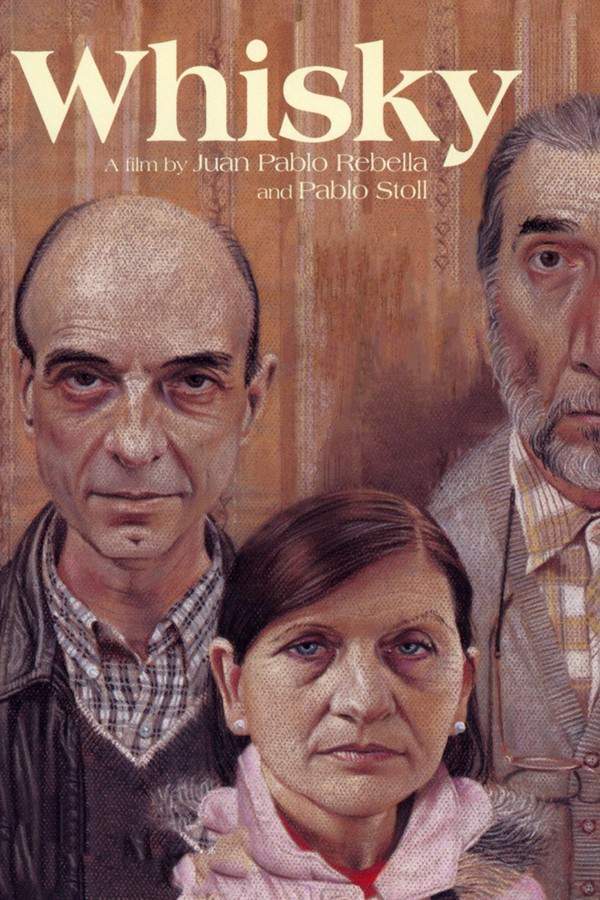
A struggling sock factory owner's quiet despair is disrupted when his charismatic brother arrives for a surprise visit after years of separation. Determined to appear successful, Jacobo devises a risky plan with the help of his mysterious assistant, Marta. This sets off a weekend filled with comical deception and unexpected revelations as family secrets come to light, testing the bonds between them all.


Does Whisky have end credit scenes?
No!
Whisky does not have end credit scenes. You can leave when the credits roll.
Meet the Full Cast and Actors of Whisky
Explore the complete cast of Whisky, including both lead and supporting actors. Learn who plays each character, discover their past roles and achievements, and find out what makes this ensemble cast stand out in the world of film and television.
No actors found
External Links and Streaming Options
Discover where to watch Whisky online, including streaming platforms, rental options, and official sources. Compare reviews, ratings, and in-depth movie information across sites like IMDb, TMDb, Wikipedia or Rotten Tomatoes.










Ratings and Reviews for Whisky
See how Whisky is rated across major platforms like IMDb, Metacritic, and TMDb. Compare audience scores and critic reviews to understand where Whisky stands among top-rated movies in its genre.

66
Metascore
7.5
User Score


%
TOMATOMETER

0%
User Score
Take the Ultimate Whisky Movie Quiz
Challenge your knowledge of Whisky with this fun and interactive movie quiz. Test yourself on key plot points, iconic characters, hidden details, and memorable moments to see how well you really know the film.
Whisky (2005): A drama about Jacobo, a solitary sock-factory owner, who stages a fake marriage with his supervisor Marta to impress his estranged brother Herman, leading to shifting loyalties, a risky casino gamble, and an ambiguous ending.
What is Jacobo's profession at the start of the film?
Full Plot Summary and Ending Explained for Whisky
Read the complete plot summary of Whisky, including all major events, twists, and the full ending explained in detail. Explore key characters, themes, hidden meanings, and everything you need to understand the story from beginning to end.
Jacobo, the owner of a sock factory, leads a life defined by routine and isolation. His days unfold in the quiet confines of his work and his apartment, where everything feels controlled and predictable. When his brother, Herman, returns to town to mark the anniversary of their mother’s death, the mood shifts from the expected calm to a subtle tension that lingers just beneath the surface. Jacobo turns to Marta, the head supervisor at his factory, asking her to play a role in a carefully staged illusion: to pretend to be his wife so that Herman will see a loving, healthy marriage and believe his brother has built a life worth admiring.
To pull off this deception, the pair reunites the house with a fresh polish. They redecorate and clean, and together they pose for a photograph meant to hang in the living room, a visual cue of happiness that neither fully believes in. As the days pass, their bond grows in fits and starts, yet there remains a palpable gap between them—an invisible barrier that hints at how little they truly know about one another. The impression is clear: Marta and Jacobo share a connection, but it is tempered by hesitation, formality, and the absence of real warmth.
Herman’s arrival brings its own currents of change. He and Jacobo exchange socks from their respective factories at the airport, a small ritual that underscores their estrangement and the unspoken competition that shadows the brothers. Their early days together feel awkward, almost as if they are two strangers rather than siblings united by blood. Herman’s charisma and social ease highlight Jacobo’s own quiet reluctance to engage with life beyond the confines he has always known. The trip to a seaside resort town, Piriápolis, becomes a turning point: Herman invites Marta and Jacobo to join him at a place steeped in childhood memories, a location that hints at past bonds and potential future tensions.
Once in Piriápolis, Marta and Herman grow closer, and their closeness carries the danger of crossing into romance. The possibility of a real relationship between Marta and Herman becomes more than a rumor, and Jacobo notices the shift with a mix of discomfort and growing insecurity. Marta seems susceptible to Herman’s outgoing nature, which weakens any chance Jacobo might have for a true connection with her. Through the trip, Jacobo remains emotionally distant and often cold, his anxiety about the evolving dynamics overshadowing any chance for genuine warmth to emerge among the three.
Before Herman returns home, he offers Jacobo a stack of money as compensation for the time he spent caring for their mother. Jacobo initially refuses, but the moment is influenced by Herman’s gesture—made all the more potent when Herman serenades Marta in a karaoke restaurant, a scene that makes the money feel less like a gift and more like a symbol of a shifting power dynamic. After hearing the performance, Jacobo reluctantly accepts the money, his resentment toward his brother deepening as he processes what the acceptance represents: a brother who is not only more financially secure but also more entwined with Marta.
That sense of defeat drives Jacobo into a late-night impulse. He goes to a casino and bets everything on Black 24 in roulette, a solitary gamble that pays off with an unexpected win. He pockets some of the winnings, but also sets aside a substantial portion to be given to Marta as a form of proof, perhaps, of his own longing for connection or a desire to keep her tied to him in some way. As they bid Herman farewell, Marta slips a note into Jacobo’s hand, asking him to read it on the plane—a private communication that promises something more, though its contents remain unseen.
Back home, Jacobo arranges a taxi for Marta and places the cash in her possession, a final act that cements the strange, fraught balance between them. Marta clutches the money in the back of the cab, her fate and feelings left to the road ahead. She finally says, “See you tomorrow,” a familiar line that rings hollow as she fails to show up for work the next morning. In the wake of her absence, Jacobo resumes his routine with the same dull certainty that has defined his life, left to wonder what might have been and what now may never be.
In the end, the film leaves Jacobo in a state of quiet stasis. The facade of a perfect, loving arrangement has been maintained outwardly, but the internal world of the characters remains unsettled. Marta’s departure—whether permanent or temporary—lingers as an unanswered question, and Jacobo continues to navigate a life that feels more like a ritual than a relationship, his days looping back to the same patterns, devoid of the warmth that once seemed possible but never fully realized.

Watch Trailers, Clips & Behind-the-Scenes for Whisky
Watch official trailers, exclusive clips, cast interviews, and behind-the-scenes footage from Whisky. Dive deeper into the making of the film, its standout moments, and key production insights.
Whisky Themes and Keywords
Discover the central themes, ideas, and keywords that define the movie’s story, tone, and message. Analyze the film’s deeper meanings, genre influences, and recurring concepts.
Whisky Other Names and Titles
Explore the various alternative titles, translations, and other names used for Whisky across different regions and languages. Understand how the film is marketed and recognized worldwide.
Similar Movies To Whisky You Should Know About
Browse a curated list of movies similar in genre, tone, characters, or story structure. Discover new titles like the one you're watching, perfect for fans of related plots, vibes, or cinematic styles.







Quick Links: Summary, Cast, Ratings, More

What's After the Movie?
Not sure whether to stay after the credits? Find out!




Explore Our Movie Platform
New Movie Releases (2026)
Famous Movie Actors
Top Film Production Studios
Movie Plot Summaries & Endings
Major Movie Awards & Winners
Best Concert Films & Music Documentaries
Movie Collections and Curated Lists
© 2026 What's After the Movie. All rights reserved.