
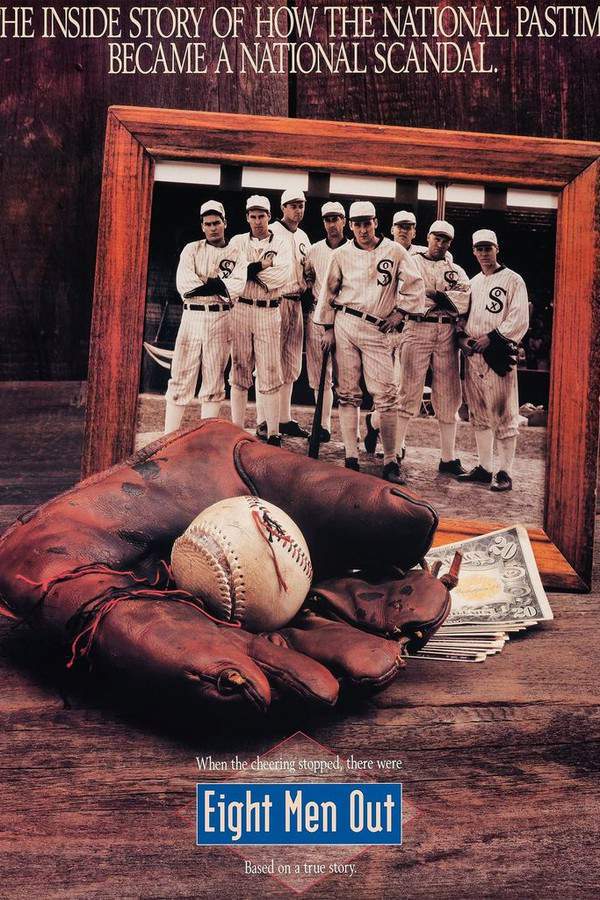
Eight Men Out 1988

Directed by

John Sayles
Made by

Orion Pictures
Eight Men Out Plot Summary
Read the complete plot summary and ending explained for Eight Men Out (1988). From turning points to emotional moments, uncover what really happened and why it matters.
As the 1919 season comes to a thrilling conclusion, the Chicago White Sox bask in the glory of their American League pennant victory, featuring an impressive lineup of exceptional talent. However, the team’s owner, Charles Comiskey, proves to be a miser, neglecting to reward his players for their remarkable achievements. Amidst this environment of discontent, gamblers “Sleepy Bill” Burns and Billy Maharg set their sights on the team’s star pitcher, Eddie Cicotte, who had been poised to achieve an extraordinary 29-7 win-loss record along with a remarkable earned run average of 1.82.
Cicotte’s decision to engage with the gamblers arises from Comiskey’s refusal to fulfill a promised $10,000 bonus if he could reach the 30-win milestone. Team manager Kid Gleason further complicates matters by benching Cicotte for two weeks, citing an unexplained need for him to rest before the World Series against the Cincinnati Reds.
As tensions escalate, a faction of players, including Chick Gandil, Swede Risberg, and Lefty Williams, are manipulated into throwing the series by Burns and Maharg. Meanwhile, the talented and charismatic “Shoeless Joe” Jackson gets unwittingly entangled in the scheme, his naïveté rendering him incapable of fully grasping the seriousness of the fix.
In contrast, Buck Weaver stands firm against corruption, remaining committed to winning at any cost. As the series commences, Cicotte’s first act of defiance is to hit Reds leadoff hitter Morrie Rath with his second pitch, signaling to Arnold Rothstein that their plan is operational.
Cicotte’s unfortunate start in Game 1 results in five runs over four innings, culminating in an embarrassing Sox loss of 9-1. As the series proceeds, both Williams and Gandil, along with their teammates, make glaring errors, further deteriorating team morale as payouts promised by the gamblers fail to materialize, leading many to question their integrity and choices.
Amid growing suspicion, journalists Ring Lardner and Hugh Fullerton scrutinize the Sox’s performance while Gleason remains optimistic about his players’ integrity. The White Sox find a brief glimmer of hope as rookie pitcher Dickie Kerr leads them to victory in Game 3, yet the atmosphere remains tense.
As the series unfolds, Cicotte continues to struggle, ultimately leading to a crushing defeat in Game 5. Though they manage a thrilling extra-inning win in Game 6, manager Gleason’s decision to bench Cicotte for Game 7 is challenged by the embattled pitcher, who seeks redemption for his past performances. In the end, despite some individual successes—including Jackson’s home run—the Sox succumb to the Reds with a final score of 5-3.
The aftermath of the Series is swift and severe. Journalist Fullerton publishes a harsh critique, igniting an investigation into the alleged fixing of the tournament. This leads to confessions from Cicotte and Jackson in 1920, resulting in charges against all eight implicated players. Although they are acquitted, they face a lifetime ban from baseball at the hands of newly appointed commissioner Kenesaw Mountain Landis.
As history unfolds, we find Weaver in 1925 amid the peaceful hills of New Jersey, reflecting on his past as he witnesses Jackson taking the field again under an assumed identity. Though the air is thick with suspicion among fans, Weaver’s response remains resolute as he defiantly shields his former teammate from scrutiny, invoking the legacy of the 1919 World Series.
The closing title card serves as a haunting reminder of the consequences faced by the eight players, their once-bright prospects dimmed by the shadow of scandal. Weaver’s own fight for vindication ultimately ends with his death in 1956, marking the close of an era and sealing the fate of a chapter in history forever tainted by ambition’s corrupting allure.
Eight Men Out Timeline
Follow the complete movie timeline of Eight Men Out (1988) with every major event in chronological order. Great for understanding complex plots and story progression.
Chicago White Sox Wins American League Pennant
In 1919, the Chicago White Sox secured their position as the champions of the American League. The players celebrated their remarkable achievements, basking in the glory of their impressive talent and teamwork.
Charles Comiskey Refuses Player Bonuses
Despite the team's success, owner Charles Comiskey earned a reputation as a miser when he neglected to reward his players. His refusal to give a promised $10,000 bonus to pitcher Eddie Cicotte for reaching 30 wins left many players feeling undervalued.
Gamblers Approach Eddie Cicotte
In the wake of Comiskey's refusal, gamblers Sleepy Bill Burns and Billy Maharg approached Eddie Cicotte, aiming to manipulate him into throwing the World Series. Cicotte's financial struggles led him to consider their proposal seriously.
Kid Gleason Benches Cicotte
Team manager Kid Gleason decided to bench Cicotte for two weeks leading up to the World Series. This decision stirred speculation and added tension among players as the series against the Cincinnati Reds approached.
Players Entangled in Fixing Scheme
Chick Gandil, Swede Risberg, and Lefty Williams become involved with Burns and Maharg, actively participating in the World Series fix. Meanwhile, Shoeless Joe Jackson, unaware of the gravity of the situation, gets caught up in the scheme due to his naïveté.
Cicotte Signals Fixing Plan
As Game 1 of the World Series begins, Cicotte hits Reds leadoff hitter Morrie Rath with an intentional pitch. This act is a signal to gambler Arnold Rothstein that the players' plan is put into motion to throw the series.
Embarrassing Loss in Game 1
The White Sox faced a staggering defeat in Game 1 against the Cincinnati Reds, losing 9-1. Cicotte's poor performance, allowing five runs in just four innings, was indicative of the turmoil facing the team.
Errors and Suspicion Mount
As the World Series continued, glaring errors from multiple players raised suspicion among fans and journalists alike. Many began questioning the integrity of the team, especially as payouts promised by the gamblers failed to arrive.
Dickie Kerr Leads Game 3 Victory
In a surprising turn of events, rookie pitcher Dickie Kerr led the White Sox to victory in Game 3. His performance brought a brief sense of hope amid the growing tension surrounding the team's actions.
Cicotte's Continued Struggles in Game 5
Cicotte's difficulties persisted as the series progressed, culminating in another crushing defeat in Game 5. Despite some individual player successes, the Sox's morale was at an all-time low.
Gleason Benches Cicotte for Game 7
Manager Kid Gleason's decision to bench Cicotte for Game 7 created further controversy. This decision faced challenges from Cicotte himself, who sought redemption after his disappointing performances earlier in the series.
White Sox Lose World Series
The Chicago White Sox ultimately fell to the Cincinnati Reds with a final score of 5-3 in Game 8. Despite a thrilling home run from Shoeless Joe Jackson, the team could not overcome the previous weeks' misdeeds.
Investigation into Series Fix
Following the series, journalist Hugh Fullerton's scathing critique of the White Sox performance ignited a major investigation into allegations of fixing. As scrutiny intensified, confessions from Cicotte and Jackson in 1920 implicated all eight players involved.
Lifetime Ban from Baseball
Despite being acquitted of criminal charges, all eight implicated players received lifetime bans from baseball by newly appointed commissioner Kenesaw Mountain Landis. The scandal forever altered the landscape of Major League Baseball.
Weaver Reflects in New Jersey
In 1925, Buck Weaver recalls the events of the 1919 World Series while observing Shoeless Joe Jackson playing under an assumed identity. Though suspicions linger among fans, Weaver stands resolute in defending his former teammate.
Eight Men Out Characters
Explore all characters from Eight Men Out (1988). Get detailed profiles with their roles, arcs, and key relationships explained.
Charles Comiskey
The owner of the Chicago White Sox, Comiskey is portrayed as a penny-pinching businessman who fails to reward his players adequately. His refusal to fulfill promises leads to resentment among the team, setting the stage for the events that follow. His character embodies the conflicts between management and athletes, highlighting themes of greed and exploitation.
Buck Weaver
A player for the White Sox, Buck Weaver stands out for his strong commitment to integrity amidst the scandal. He resists the temptation to fix games, aiming to win through talent rather than deceit. Weaver's character represents the moral struggle faced by players and highlights the theme of loyalty in the face of corruption.
Eddie Cicotte
The star pitcher of the White Sox, Cicotte becomes embroiled in the gambling scheme due to unmet promises from management. His character illustrates the tension between personal ambition and ethical behavior, ultimately leading to his downfall. Cicotte's internal conflict serves as a poignant reminder of the vulnerability of athletes to external pressure.
"Shoeless Joe" Jackson
"Shoeless Joe" Jackson is a talented and charismatic player entangled in the scandal, showcasing a layer of innocence and naivety. His involvement reflects the pressures of being a star athlete and the challenges of navigating a corrupt environment. Jackson's character adds emotional depth to the story, serving as both a victim and a participant in the unfolding drama.
Eight Men Out Settings
Learn where and when Eight Men Out (1988) takes place. Explore the film’s settings, era, and how they shape the narrative.
Time period
1919, 1920, 1925
The events unfold during the tumultuous year of 1919 when the White Sox faced the Cincinnati Reds in the World Series, overshadowed by allegations of cheating. This period is marked by significant tensions in sports ethics and player integrity. The story later transitions to 1920, following the aftermath of the scandal, with reflections on the consequences faced by the players in 1925.
Location
Chicago, Cincinnati, New Jersey
The movie is primarily set in Chicago, where the White Sox are based, showcasing the city during the early 20th century when baseball was a beloved pastime. Cincinnati serves as the site for the World Series against the Reds, adding a layer of historical context to the sports rivalry. The narrative later shifts to the peaceful hills of New Jersey, symbolizing a reflection on past events and their impact on the characters' lives.
Eight Men Out Themes
Discover the main themes in Eight Men Out (1988). Analyze the deeper meanings, emotional layers, and social commentary behind the film.
⚖️
Corruption
Corruption plays a central role in the narrative, as the players' ambition for success and financial gain leads them to compromise their integrity. This theme is showcased through the manipulation by gamblers and the internal conflict among the team members. The consequences of their actions serve as a cautionary tale about the dangers of greed and ethical lapses in sport.
🏆
Ambition
Ambition drives the characters throughout the film, with players aiming for personal achievements and financial rewards. However, this thirst for success ultimately leads to their downfall, highlighting the thin line between ambition and moral corruption. The pursuit of glory turns into a double-edged sword as it entangles them in a scandal that forever alters their lives.
🔍
Justice
The quest for justice permeates the story as journalists and authorities seek to uncover the truth behind the World Series scandal. The investigation into the players' actions reflects broader societal concerns regarding accountability and ethics in sports. Ultimately, the struggle for justice leads to a profound personal loss for the characters involved, serving to underscore the thematic importance of integrity.

Eight Men Out Spoiler-Free Summary
Discover the spoiler-free summary of Eight Men Out (1988). Get a concise overview without any spoilers.
In the summer of 1919, baseball swells with the same mythic grandeur that once made the sport the heart of a nation. The Chicago White Sox, fresh from a triumphant American League pennant, stand on the cusp of a World Series that promises to crown an era’s champions. The atmosphere in the ballpark is electric, the stadium lights glittering over a city eager for a hero’s final act, while the quiet streets outside whisper of a changing world where money and ambition begin to blur the lines of the game’s old‑school honor.
Inside the locker room, the team’s talent erupts like a chorus of brass—Eddie Cicotte, a pitcher on the verge of a historic season; the charismatic outfielder “Shoeless Joe” Jackson, whose batting prowess seems boundless; and the steadfast infielder Buck Weaver, whose love of the sport is as pure as the crack of a fresh bat. Their manager, Kid Gleason, strives to steady the ship, while owner Charles Comiskey keeps a tight grip on the purse strings, sowing a quiet discontent among his stars. At the same time, shadowy figures from the gambling world edge ever closer, offering the promise of easy wealth that threatens to test each player’s loyalty and conscience.
As the series looms, the Sox find themselves perched on a knife‑edge between glory and temptation. The mood is a blend of gritty determination and uneasy anticipation, a tableau of ordinary men confronting extraordinary pressure. The lingering question is not who will win on the field, but how each man will reconcile his personal dreams with the enduring legacy of a sport that has always prized integrity above all else.
Movies with Similar Twists and Themes
Uncover films that echo the narrative beats, emotional arcs, or dramatic twists of the one you're exploring. These recommendations are handpicked based on story depth, thematic resonance, and spoiler-worthy moments — perfect for fans who crave more of the same intrigue.

Featured on this page

What's After the Movie?
Not sure whether to stay after the credits? Find out!




Explore Our Movie Platform
New Movie Releases (2026)
Famous Movie Actors
Top Film Production Studios
Movie Plot Summaries & Endings
Major Movie Awards & Winners
Best Concert Films & Music Documentaries
Movie Collections and Curated Lists
© 2026 What's After the Movie. All rights reserved.