
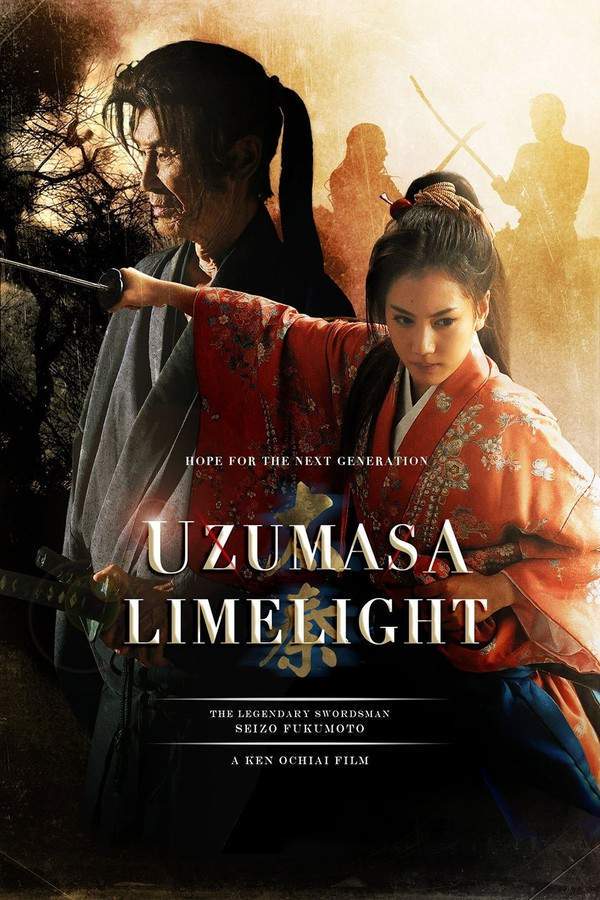
Uzumasa Limelight 2014

Directed by

Ken Ochiai
Made by

Eleven Arts
Uzumasa Limelight Plot Summary
Read the complete plot summary and ending explained for Uzumasa Limelight (2014). From turning points to emotional moments, uncover what really happened and why it matters.
Kamiyama Seiichi, portrayed by Fukumoto Seizo, has dedicated his life to the art of acting as a “kirare-yaku” or “drop-dead” actor, serving as a swordsman extra in historical samurai films. For an impressive 40 years, he has appeared in a long-running TV samurai drama alongside the esteemed kabuki actor Onoe Seijuro, and previously, his legendary father, Kobayashi Nenji. However, the stability of his role is shattered when the show’s cancellation is announced, paving the way for a new period drama that features younger talent, CGI effects, and inauthentic costumes.
In the wake of this change, Kamiyama and his dedicated team of veteran drop-dead actors struggle to secure new roles, often finding themselves disregarded by the younger crew members. Rather than being cast in substantial parts, they end up performing in sword demonstrations for eager tourists at the Uzumasa studio in Kyoto. Despite these challenges, Kamiyama remains committed to his craft, practicing his swordplay every night on the now-deserted film sets.
His dedication catches the attention of a young extra, Iga Satsuki, played by Yamamoto Chihiro, who, with considerable effort, persuades him to take her on as a sword fighting student. Unexpectedly, Satsuki’s talent shines through, propelling her to stardom as a skilled swordswoman, while Kamiyama grapples with the reality of aging and faces pressure to retire.
Eventually, it is decided that Satsuki will co-star with Onoe in a theatrical film inspired by their long-running show. To everyone’s surprise, she adamantly insists that Kamiyama be given a prominent drop-dead role. However, going against his better judgment, he hesitates and feels reluctant to take the opportunity. To the studio’s delight, Kamiyama returns, but during his highly anticipated fight scene, he unexpectedly fumbles his sword—a moment that leaves everyone on edge.
The seasoned director, Nakajima Sadao, who plays himself, contemplates cutting Kamiyama from the scene, but the determined young producer insists on giving him another chance. In a breathtaking finale, Kamiyama executes his swan-song with extraordinary elegance, falling amidst a delicate cascade of cherry blossoms, proving that his legacy as a “kirare-yaku” is far from over.
Uzumasa Limelight Timeline
Follow the complete movie timeline of Uzumasa Limelight (2014) with every major event in chronological order. Great for understanding complex plots and story progression.
Introduction of Kamiyama Seiichi
Kamiyama Seiichi has dedicated his life to acting as a 'kirare-yaku', or 'drop-dead' actor, specializing as a swordsman extra in historical samurai films. He has maintained this passion for **40 years**, showcasing his unwavering commitment to the craft and the traditions of samurai cinema.
Cancellation of Long-Running TV Drama
The long-running TV samurai drama, which featured Kamiyama along with esteemed kabuki actor Onoe Seijuro, is abruptly cancelled. This announcement sends shockwaves through the cast and crew, signifying a dramatic shift in the industry that would prioritize younger talent and modern technology.
Transition to New Period Drama
In the wake of the cancellation, a new period drama emerges, showcasing younger stars, CGI effects, and inauthentic costumes. Kamiyama and his fellow veteran actors find themselves sidelined, struggling to adapt to the new creative landscape that overlooks their experience.
Sword Demonstrations for Tourists
As their opportunities dwindle, Kamiyama and the veteran drop-dead actors resort to performing sword demonstrations for tourists at the Uzumasa studio in Kyoto. This shift in roles symbolizes the decline of traditional samurai cinema and the fading recognition of skilled artisans behind the scenes.
Kamiyama's Dedicated Practice
Despite facing a bleak career outlook, Kamiyama remains dedicated to honing his craft. Night after night, he practices swordplay on the now-deserted film sets, embodying the spirit of perseverance and loyalty to his craft, even in the face of adversity.
Iga Satsuki Seeks Kamiyama's Guidance
The young extra, Iga Satsuki, notices Kamiyama's commitment and convinces him to take her on as a sword fighting student. Her persistence pays off, as Satsuki's natural talent begins to shine, bringing a fresh perspective to Kamiyama’s routine and reinvigorating his passion.
Satsuki's Rise to Stardom
As Satsuki trains under Kamiyama, her remarkable skills quickly propel her to stardom as a leading swordswoman. This rise not only highlights her talent but also forces Kamiyama to confront his own aging and the growing pressure to retire from acting.
Satsuki's Co-Starring Role
Satsuki is given the chance to co-star alongside Onoe Seijuro in a theatrical film inspired by their long-running show. This opportunity marks a turning point, showcasing a blend of new talent and traditional acting, and setting the stage for Kamiyama's potential return to the spotlight.
Kamiyama's Reluctance to Accept the Role
Despite Satsuki's insistence that he be cast in a prominent drop-dead role, Kamiyama finds himself hesitant and reluctant to seize the opportunity. His internal conflict reflects the complexities of embracing change while remaining loyal to his established identity as a veteran actor.
Kamiyama's Return to the Screen
To everyone's delight, Kamiyama eventually agrees to return for the film. However, during a highly anticipated fight scene, he unexpectedly fumbles his sword, creating a tense moment that leaves both the crew and the audience on edge about his ability to deliver.
Director's Dilemma
The seasoned director, Nakajima Sadao, who plays himself in the film, considers cutting Kamiyama from the scene after the mishap. However, the young producer advocates for giving him another chance, recognizing the importance of Kamiyama's legacy in the world of acting.
Breathtaking Finale
In a stunning comeback, Kamiyama executes his swan-song with extraordinary grace. The scene culminates with him dramatically falling amidst a cascade of cherry blossoms, illustrating that his legacy as a 'kirare-yaku' is far from over and reinvigorating the spirit of traditional samurai cinema.
Uzumasa Limelight Characters
Explore all characters from Uzumasa Limelight (2014). Get detailed profiles with their roles, arcs, and key relationships explained.
Kamiyama Seiichi
Kamiyama Seiichi is a dedicated 'kirare-yaku' with an extensive career spanning 40 years. His humility and commitment to his art serve as cornerstones of his character, as he copes with the realities of aging and the pressure to continue evolving. His character exhibits a profound love for his craft, battling feelings of obsolescence while remaining passionate about sword fighting.
Iga Satsuki
Iga Satsuki is a young extra who surprises everyone with her exceptional talent in sword fighting. Her determination leads her to seek mentorship from Kamiyama, showcasing her ambition and rapid rise in the industry. Satsuki embodies the new generation of actors who are reshaping the landscape, yet she appreciates the legacy and skill of seasoned performers.
Onoe Seijuro
Onoe Seijuro is a distinguished kabuki actor and veteran in the industry, representing a link to the traditional performances of the past. His presence signifies the esteem held for established actors, and he supports Kamiyama's return to the spotlight, reinforcing the importance of mentorship within the film community.
Uzumasa Limelight Settings
Learn where and when Uzumasa Limelight (2014) takes place. Explore the film’s settings, era, and how they shape the narrative.
Time period
The film reflects a contemporary setting, showcasing the evolution of the film industry over the years. Specifically, it addresses the challenges traditional actors face due to technological advancements and changing audience preferences in modern cinema, emphasizing the tension between old and new.
Location
Kyoto, Uzumasa studio
Kyoto, a city renowned for its classical Buddhist temples, as well as gardens, imperial palaces, and traditional wooden houses, serves as the backdrop for this poignant tale. The Uzumasa studio is known for its historical samurai films and acts as a significant setting where the veteran actors showcase their dedication to their craft amidst changing times in the film industry.
Uzumasa Limelight Themes
Discover the main themes in Uzumasa Limelight (2014). Analyze the deeper meanings, emotional layers, and social commentary behind the film.
🎭
Legacy
The theme of legacy is central to Kamiyama's journey as a seasoned actor confronting the inevitable passage of time. It explores the struggles of maintaining one's relevance in an industry that increasingly favors youth and new technology. Despite the challenges, Kamiyama's unyielding passion for the craft ultimately leads to a triumphant reaffirmation of his artistry.
🌸
Resilience
Resilience is a prominent theme as Kamiyama and his fellow veteran actors navigate the harsh realities of their profession. The film portrays their determination to adapt to change, showcasing their relentless dedication and commitment to their art, even as they face obsolescence in a youth-driven landscape.
⚔️
Mentorship
The theme of mentorship emerges through Kamiyama's relationship with the young extra, Satsuki. As he guides her in sword fighting, the film highlights the transfer of knowledge between generations and the importance of nurturing talent while coming to terms with one's own limitations and legacy.

Uzumasa Limelight Spoiler-Free Summary
Discover the spoiler-free summary of Uzumasa Limelight (2014). Get a concise overview without any spoilers.
In the heart of Kyoto’s historic Uzumashi film district, where bamboo shadows stretch across weather‑worn sound stages, a quiet community of “kirareyaku” — the actors whose purpose is to die gloriously on cue — keeps the age‑old rhythm of jidaigeki alive. Their world is a blend of meticulously crafted swords, silk kimonos, and the whispered reverence for a craft that once defined Japanese cinema. Yet the neighborhood now hums with a subtle unease: streaming platforms, CGI‑enhanced spectacles, and a new generation of talent threaten the timeless art that has lived in these backlots for decades.
At the center of this fading tableau stands Kamiyama Seiichi, a veteran drop‑dead actor whose career stretches over four decades. He has spent his life perfecting the fleeting moment of a perfectly timed fall, a breath‑suspended silence that allows the hero to shine. His devotion is palpable, from the endless nights rehearsing swordplay on empty sets to the quiet pride he feels for the legends he has supported. The announcement of his long‑running samurai series’ conclusion forces him to confront an industry in transition and his own place within it.
Entering this delicate balance is Iga Satsuki, a youthful extra whose curiosity and admiration for Kamiyama ignite a tentative mentorship. Their connection hints at the possibility of bridging past and future, as the seasoned actor imparts the discipline of swordcraft while confronting the inevitable questions of relevance, aging, and artistic purpose. Around them, seasoned directors and eager producers watch the shifting dynamics, embodying the tension between reverence for tradition and the allure of modernization.
The film unfolds with a reverent, almost lyrical tone, inviting viewers to contemplate the beauty hidden behind every staged death and the silent sacrifices that sustain an art form. It paints a portrait of devotion, loss, and the quiet perseverance of those who remain unseen, promising an emotional journey that honors both the past and the uncertain horizon ahead.
Featured on this page

What's After the Movie?
Not sure whether to stay after the credits? Find out!




Explore Our Movie Platform
New Movie Releases (2026)
Famous Movie Actors
Top Film Production Studios
Movie Plot Summaries & Endings
Major Movie Awards & Winners
Best Concert Films & Music Documentaries
Movie Collections and Curated Lists
© 2026 What's After the Movie. All rights reserved.