
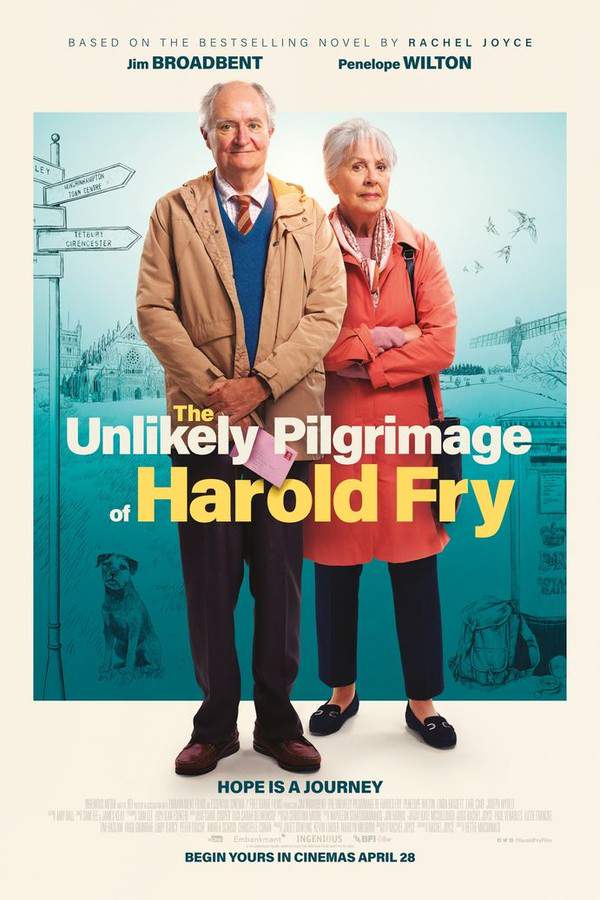
The Unlikely Pilgrimage of Harold Fry 2024
Directed by

Hettie Macdonald
Made by

Essential Cinema
The Unlikely Pilgrimage of Harold Fry Plot Summary
Read the complete plot summary and ending explained for The Unlikely Pilgrimage of Harold Fry (2024). From turning points to emotional moments, uncover what really happened and why it matters.
Retired pensioner Harold Fry lives in Kingsbridge in south Devon with his wife Maureen, where he lives a sedentary life. A letter from an old colleague, Queenie Hennessy, reveals she is dying from cancer and is living in a hospice in Berwick-upon-Tweed. Penning a perfunctory response, he complains that the words he has written are not enough of a response but, lacking ideas, he goes to post them anyway. Finding himself still reluctant to release the letter he continues walking into town, passing multiple opportunities to send the letter, before finding himself in a petrol garage where the attendant tells him that her support helped her aunt fight back against her own cancer. Inspired, he calls the hospice and asks them to tell Queenie that he intends to walk to Berwick - some 500 miles - and she must hold onto her life until he arrives.
Realising Harold is not returning, Maureen is at first worried, then when he calls her to inform her of his plan, she reacts angrily. Eventually, she reveals to her neighbour Rex that following several years of rocky relationship, she fears he has taken the opportunity to finally walk out on their marriage - something she admits she had almost done numerous times in the past.
After several days of travel, Harold begins to suffer flashbacks and hallucinations of his son, David. Suffering a tempestuous relationship, in his early adult years David spurned Harold’s parenting and their relationship broke down. After collapsing in the road, Harold is taken in by Martina, a Slovakian doctor who emigrated to the UK but is now unable to find any other work than cleaning. She treats his feet, which are now covered in sores and infected blisters, and allows him to recuperate in her house for several days. Meanwhile she reveals that her partner left her for another woman a year ago, and she still waits for him to return every day. Though Harold does not feel himself equal to her hospitality, she tells him that his refusal to accept bitter truths lying down humbles her, and she sends him on his way with several pieces of walking kit left by her former partner.
Harold’s journey continues for several weeks, with Harold continuing to meet strangers and humble them with his selfless spirit. Stopping for a drink in a pub, one patron asks to take his picture as a keepsake. The photo makes its way to the media and he rapidly becomes a national sensation, though Harold has no knowledge of the story. Shortly after, Harold is joined by Wilf, an eighteen-year-old junkie who was inspired by his story and wants to walk to save Queenie too. As more media outlets pick up the story, several dozen more individuals join him and collectively adopt the moniker of ‘Pilgrim’, though Harold seems bemused by their presence and struggles to understand why they are fascinated by him. Maureen and Rex also travel up to visit Harold, though when Harold invites Maureen to join his walk she responds in frustration that she is unable to let go of the things holding her back in the way he has.
The camp, though continuing to grow and fostering a genuine camaderie amongst the Pilgrims, slowly becomes something of a circus and is by now making barely any progress towards Berwick. Harold’s memories of his son continue, and after Wilf flees the camp after being caught raiding Harold’s supplies and carrying pills, Harold recalls David’s own descent into drug-taking. In a discussion with another Pilgrim he tells her of how he watched his son deteriorate before he took his own life in their garage. The Pilgrim helps Harold to accept that he needs to leave the camp behind to reach his destination.
Now alone, Harold’s mental state declines as he fears the end of the journey will result in the same loss as he suffered with David, and he eventually phones Maureen from a phone booth to tell her that he has no idea where he is and that he wants to come home. Maureen, having had time to come to terms with her own feelings, instead informs him that he is only 18 miles from Berwick and that he must finish his journey. She also reveals to him that she never passed on Queenie’s final message to him some 25 years earlier. Believing that he was to blame for David’s death and the resulting near-collapse of his marriage, Harold had turned to drink and had determined to engineer ways of punishing himself further. He had therefore driven to his place of work at night and destroyed much of their stock, intending on being fired for his actions. Instead, Queenie had found him first and had taken the blame for the damage, being dismissed in his place but allowing him to rebuild his life. Some time later she had driven to Harold and Maureen’s house while he was out to tell him that she was moving away and to tell him not to blame himself for everything that had come to pass. Maureen, feeling spiteful for the way that he was receiving comfort where she had none and perhaps suspecting an affair, had refused to pass on the message, but finally lets him hear it.
Shortly afterwards, Harold reaches Berwick. He initially struggles to summon the nerve to enter the hospice but when he does, then he is enthusiastically greeted by the nun he has spoken to on the phone on several occasions, who leads him in to greet Queenie but warns him that she is no longer able to speak. Something of a taciturn man, Harold finds himself unable to say much to her but hangs up a quartz pendant that he has brought from near the start of his journey in her window.
When meeting Maureen again in Berwick, Harold confesses defeat, implying that Queenie did not live long after his arrival and telling Maureen that he doesn’t understand how he thought that he could save her when he could not save David. She responds by telling him that his devotion to Queenie has helped her remember the man she used to love and that his actions have saved their marriage. Meanwhile, the various people who Harold and his story touched along the pilgrimage are shown looking at light reflected around them, and smiling.
The Unlikely Pilgrimage of Harold Fry Timeline
Follow the complete movie timeline of The Unlikely Pilgrimage of Harold Fry (2024) with every major event in chronological order. Great for understanding complex plots and story progression.
Harold Receives the Letter
Harold Fry, a retired pensioner living a quiet life with his wife Maureen, receives a letter from an old colleague, Queenie Hennessy. The letter reveals that Queenie is dying of cancer and is currently in a hospice, prompting Harold to reflect on their past.
Harold's Decision to Walk
Struggling with his inability to adequately respond to Queenie's letter, Harold decides to walk 500 miles to the hospice in Berwick-upon-Tweed. He calls the hospice to inform them of his intention, urging Queenie to hold on until he arrives.
Maureen's Reaction
When Maureen realizes Harold is not returning, she initially worries but soon grows angry when she learns of his plan. She confides in a neighbor, Rex, about her fears regarding their rocky relationship and Harold potentially walking out on her.
Encounters and Reflection
As Harold walks, he begins to have flashbacks and hallucinations of his estranged son, David, who had a troubled relationship with him. These reflections force Harold to confront painful memories from his past, deepening his emotional journey.
Help from Martina
After collapsing due to the strain of walking, Harold is taken in by Martina, a Slovakian doctor. She tends to his wounds and shares her own story of heartbreak, providing Harold the care he needs to continue his journey.
Becoming a National Sensation
During his journey, Harold's story captivates the public after a photo of him at a pub goes viral. Despite this newfound fame, Harold remains unaware of the media attention he is garnering as he focuses on his path towards Berwick.
Joining Forces with Wilf
Harold is joined by Wilf, an eighteen-year-old inspired by his mission to save Queenie. The growing number of 'Pilgrims' accompanying Harold adds to both the support and chaos of his journey, complicating his personal quest.
Harold's Struggles at the Camp
As more people join Harold, the pilgrimage becomes increasingly unruly, resembling a circus rather than a focused journey. This chaotic atmosphere causes Harold to reflect on his memories of David and the pain of their past relationship.
Confronting His Past
After a distressing incident with Wilf, Harold reminisces about the tragic end of his son’s life. He confides his fears and regrets to another pilgrim, pushing him to realize that he must leave the camp to find closure and continue towards his goal.
Turning Point for Maureen
As Harold's mental state deteriorates, he reaches out to Maureen, expressing a desire to come home. However, Maureen inspires him to finish his journey by revealing her realization about their past and her feelings during his absence.
Harold Arrives in Berwick
After days of walking and reflection, Harold finally reaches Berwick-upon-Tweed. Although he is nervous about entering the hospice, he is determined to see Queenie, despite knowing her condition may be dire.
Meeting Queenie
Harold is warmly welcomed by a nun at the hospice who guides him to Queenie. Though she cannot speak, Harold finds solace in the small act of hanging a quartz pendant in her window, symbolizing his connection to her.
Aftermath of the Meeting
Following his arrival, Harold confesses to Maureen that he feels defeated by the situation, implying that Queenie may not have survived his visit. They share a heartfelt moment where Maureen acknowledges Harold's journey's impact on their marriage.
Reflection and Connection
The film concludes with a montage showing how Harold's journey has affected others. As various people he encountered reflect on his story, they are seen smiling at light reflected around them, signifying hope and connection.
The Unlikely Pilgrimage of Harold Fry Characters
Explore all characters from The Unlikely Pilgrimage of Harold Fry (2024). Get detailed profiles with their roles, arcs, and key relationships explained.
Harold Fry (Jim Broadbent)
Harold Fry is a retired pensioner who initially lives a quiet and uneventful life. However, upon learning about his old friend's illness, he embarks on a 500-mile pilgrimage that transforms him. Throughout his journey, he faces haunting memories, particularly of his strained relationship with his son, which forces him to confront his grief and search for redemption.
Maureen Fry (Penelope Wilton)
Maureen is Harold's wife, who struggles with her feelings of abandonment and frustration towards Harold's journey. Initially angry at his decision to leave, she grapples with her own emotional turmoil and resentment, revealing the complexities of their marriage and the past they share. Ultimately, she undergoes her own transformation as Harold's actions inspire her to reflect on their relationship.
Queenie Hennessy (Linda Bassett)
Queenie is an old colleague of Harold's who is in hospice care. Her letter initiates Harold's journey, symbolizing connection and unresolved feelings from the past. Although her role is primarily as a distant figure, her influence on Harold's journey is profound, serving as a reminder of the bonds that endure despite distance and time.
The Unlikely Pilgrimage of Harold Fry Settings
Learn where and when The Unlikely Pilgrimage of Harold Fry (2024) takes place. Explore the film’s settings, era, and how they shape the narrative.
Time period
The movie explores contemporary themes, focusing on modern relationships and the complexities of life, death, and redemption. Harold's journey occurs during a time when people increasingly seek connections and healing through personal experiences.
Location
Kingsbridge, Berwick-upon-Tweed
Kingsbridge is a quaint town in south Devon, known for its picturesque scenery and peaceful lifestyle. It's where Harold Fry lives with his wife Maureen, leading a quiet life until the letter from Queenie changes everything. Berwick-upon-Tweed, located in Northumberland, is the final destination of Harold's pilgrimage, a place that represents hope and reconciliation amidst challenging circumstances.
The Unlikely Pilgrimage of Harold Fry Themes
Discover the main themes in The Unlikely Pilgrimage of Harold Fry (2024). Analyze the deeper meanings, emotional layers, and social commentary behind the film.
🛤️
Journey
The central theme of the movie is the journey, both physical and emotional. Harold's pilgrimage to Berwick becomes a metaphor for his quest for forgiveness, understanding, and resolution with his past. It highlights how journeys can lead to personal growth and healing.
💔
Loss and Grief
The movie delves deep into the themes of loss and grief, particularly through Harold's relationship with his son David and his unresolved feelings surrounding Queenie's illness. These emotional struggles drive the characters to seek connection and ultimately find solace in unexpected ways.
💞
Redemption
Redemption is a key theme as Harold confronts his past mistakes and seeks to atone for them. His commitment to Queenie signifies a desire to redeem himself and find a sense of peace that had long been elusive. Throughout his journey, he learns that redemption comes not just from actions, but from understanding and connection with others.

The Unlikely Pilgrimage of Harold Fry Ending Explained
Unravel the ending of The Unlikely Pilgrimage of Harold Fry (2024) with our detailed explanation. Understand the final scenes, character fates, and unresolved questions.
Harold’s journey ultimately becomes a profound journey of self-discovery and forgiveness. Throughout his pilgrimage, he encounters many people whose stories and struggles help him reflect on his own life and mistakes, especially in relation to his estranged son, David. Harold’s motivation was initially sparked by a desire to help his dying friend Qweenie, but as he walks, he begins to understand the importance of confronting his past and forgiving himself. When Harold reaches the hospice, he finds Qweenie physically unable to speak or move, symbolizing the fragile state of life and perhaps, the limitations of trying to fix everything. His visit is emotional, filled with silent understanding rather than words, and it prompts Harold to realize that some changes are internal and that the true miracle isn’t just in saving a life but in the emotional healing that occurs within.
Throughout the film, Harold’s relationship with his wife Maureen evolves. Her support and understanding encourage him to continue his walk, especially after learning from her that her own pain from losing their son has been long buried but still persists. Her arrival at the end signifies a renewed bond, one that can heal over the scars of grief and regret. The pilgrimage has also helped Harold see that forgiveness — both of himself and others — is key to moving forward. As he sits on the bench watching the ocean, he is faced with the vastness of life and the weight of his experiences. Maureen’s presence reminds him that renewal is possible and that sometimes the most unlikely journeys can lead to the greatest emotional revelations. The story closes with Harold feeling a sense of peace, having found the courage to confront his past, and recognizing that true miracles are the moments of acceptance and forgiveness that allow us to heal.
The Unlikely Pilgrimage of Harold Fry Spoiler-Free Summary
Discover the spoiler-free summary of The Unlikely Pilgrimage of Harold Fry (2024). Get a concise overview without any spoilers.
In the quiet reaches of Devon, retired Harold Fry leads a life defined by routine and the lingering shadows of choices left unspoken. A simple, heartfelt letter arrives from his former colleague, Queenie Hennessy, who now faces a terminal illness far to the north. The notice, though brief, ignites something unexpected in Harold—a blend of duty, curiosity, and a yearning to atone for the years that have slipped by. With minimal preparation and a quiet resolve, he decides to walk the 450‑plus miles that separate his coastal town from the hospice where Queenie resides, setting the stage for a journey that promises more than just physical distance.
The world Harold steps into is a landscape of rolling hills, sleepy villages, and the ever‑present rhythm of the road. Along the way, the English countryside becomes a living tapestry, reflecting his inner state as each step uncovers memories, regrets, and moments of quiet wonder. The tone balances gentle melancholy with a subtle, uplifting optimism, suggesting that the act of moving forward can be both a literal and metaphysical pilgrimage. Harold’s relationship with his wife, Maureen, adds a layer of quiet tension; their marriage, long settled into familiar patterns, now feels the subtle tremor of unspoken concerns and the possibility of change.
At its core, the film is a meditation on the power of simple gestures to reshape a life. Harold’s decision to embark on this unlikely walk hints at the transformative potential that lies in confronting the past while embracing the unknown future. The story promises a rich blend of personal reflection, understated humor, and the quiet heroism of an ordinary man who steps beyond his comfort zone, inviting viewers to wonder what might be discovered when one dares to follow a single, earnest impulse across a country—and toward a deeper sense of hope.
Movies with Similar Twists and Themes
Uncover films that echo the narrative beats, emotional arcs, or dramatic twists of the one you're exploring. These recommendations are handpicked based on story depth, thematic resonance, and spoiler-worthy moments — perfect for fans who crave more of the same intrigue.



Featured on this page

What's After the Movie?
Not sure whether to stay after the credits? Find out!




Explore Our Movie Platform
New Movie Releases (2025)
Famous Movie Actors
Top Film Production Studios
Movie Plot Summaries & Endings
Major Movie Awards & Winners
Best Concert Films & Music Documentaries
Movie Collections and Curated Lists
© 2025 What's After the Movie. All rights reserved.