
Cabrini 2024

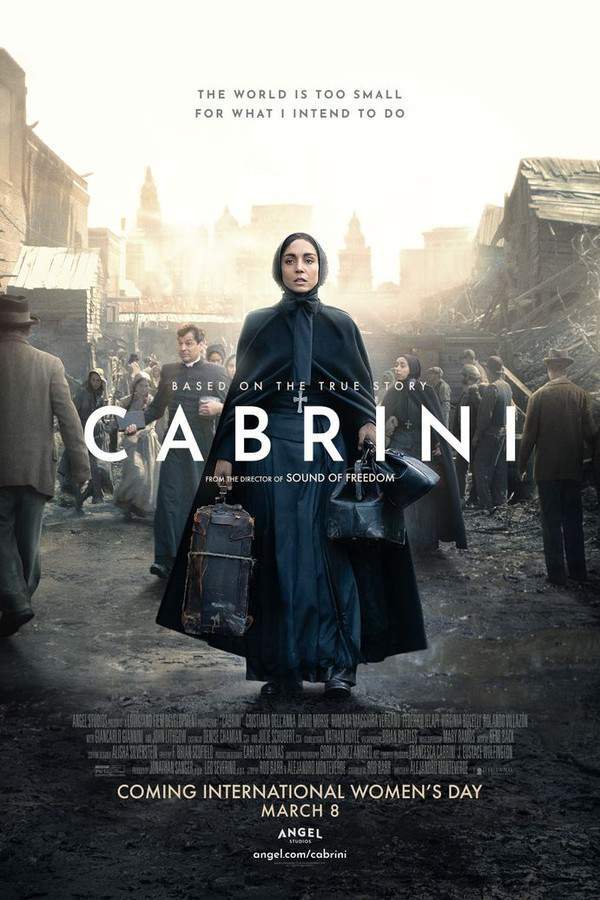
In 19th-century New York, a determined woman challenges societal norms to build a thriving enterprise. Facing prejudice and sexism, she perseveres through adversity, driven by her entrepreneurial spirit and unwavering resolve. Her story is a testament to courage and resilience in the face of significant obstacles.


Does Cabrini have end credit scenes?
No!
Cabrini does not have end credit scenes. You can leave when the credits roll.
Meet the Full Cast and Actors of Cabrini
Explore the complete cast of Cabrini, including both lead and supporting actors. Learn who plays each character, discover their past roles and achievements, and find out what makes this ensemble cast stand out in the world of film and television.

Giancarlo Giannini
Pope Leo XIII

John Lithgow
Mayor Gould

Jeremy Bobb
Calloway

Federico Ielapi
Paolo

Cristiana Dell'Anna
Cabrini

Patch Darragh
Dr. Murphy

David Morse
Archbishop Corrigan

Katherine Boecher
Romana Maggiora Vergano
Vittoria
Victoria Martzloff
Sean Cullen
Montserrat Espadalé
Sister Concetta
Virginia Bocelli
Aria
Madison Hammer
Lukas Behnken
Liam Campora
Enzo
Tom Bauerle
Taylor Clark
Eugenia Forteza
Sister Umilia
External Links and Streaming Options
Discover where to watch Cabrini online, including streaming platforms, rental options, and official sources. Compare reviews, ratings, and in-depth movie information across sites like IMDb, TMDb, Wikipedia or Rotten Tomatoes.










Ratings and Reviews for Cabrini
See how Cabrini is rated across major platforms like IMDb, Metacritic, and TMDb. Compare audience scores and critic reviews to understand where Cabrini stands among top-rated movies in its genre.

The Movie Echo Score
The film benefits from strong visual and emotional elements but struggles with pacing and narrative depth. In its balance of lush production and uneven storytelling, the movie delivers a compelling yet occasionally laborious experience. While character portrayals bring heartfelt moments and the sensory design immerses viewers in period detail, the extended runtime and episodic flow undercut sustained engagement. This results in an uneven biographical drama that impresses visually and emotionally but wanes in narrative momentum.
The Movie Echo Score Breakdown for Cabrini

Art & Craft
In terms of production design and cinematography, the film excels with meticulously crafted period detail and painterly framing. Set dressing and costume work evoke 1880s New York with authenticity, while editing choices support narrative transitions. Direction maintains a deliberate visual coherence across scenes. Overall, the film’s artful presentation stands out as its strongest feature, offering a consistently polished and immersive visual experience.

Character & Emotion
When it comes to acting and character depth, performances anchor the story with emotional clarity, particularly in the portrayal of Mother Cabrini and her antagonists. Though some characters feel underdeveloped and overly pure, key interactions convey heartfelt conviction. The leading performance captivates with nuanced resolve, creating moments of genuine engagement. Overall, character work provides emotional resonance despite occasional one-dimensionality.

Story & Flow
In terms of plot coherence and pacing, the film presents a clear chronological narrative but suffers from uneven momentum and an inflated runtime. While its inspirational true-story arc engages through determined milestones, repetitive beats and stilted dialogue occasionally stall flow. The script’s cautious tone limits dramatic tension, resulting in mixed engagement. Overall, the storytelling offers sincere purpose but lacks consistent narrative drive.

Sensory Experience
In terms of sensory experience, the score and sound design effectively underscore key emotional moments, with strategic use of silence enhancing dramatic beats. Visual style benefits from an understated yet cohesive color palette and careful lighting that supports narrative intent. While occasional soundtrack cues feel overemphatic, the overall audiovisual approach delivers an immersive period atmosphere. Ultimately, sensory elements enrich the film’s emotional and aesthetic impact.

Rewatch Factor
Regarding rewatch value, the film’s evocative visuals and committed performances offer appeal for initial viewings, yet its extended length and episodic structure diminish replay incentives. Uneven pacing and repetitive sequences make subsequent screenings feel laborious, despite moments of emotional resonance that might reward dedicated audiences. The narrative delivers historical significance, but limited narrative renewal reduces its lasting appeal. Overall, rewatch potential remains modest.

51
Metascore
6.6
User Score


90%
TOMATOMETER

98%
User Score

/10
IMDb Rating

79
%
User Score

3.4
From 29 fan ratings

4.78/5
From 51 fan ratings
Take the Ultimate Cabrini Movie Quiz
Challenge your knowledge of Cabrini with this fun and interactive movie quiz. Test yourself on key plot points, iconic characters, hidden details, and memorable moments to see how well you really know the film.
Cabrini (2024) Quiz: Test your knowledge of the 2024 film *Cabrini*, covering its plot, characters, and historical context.
What is the name of the Italian nun whose vision drives the story of the film?
Full Plot Summary and Ending Explained for Cabrini
Read the complete plot summary of Cabrini, including all major events, twists, and the full ending explained in detail. Explore key characters, themes, hidden meanings, and everything you need to understand the story from beginning to end.
In 1889 New York City, a young Italian immigrant named Paolo pushes his dying mother in a cart, and when they seek help at a hospital, they speak only Italian and are cruelly dismissed by staff. An older boy, Enzo, offers the two a fragile shelter in the sewers, where life remains perilous but warmer than the streets they’ve known.
Mother Frances Xavier Cabrini, a tuberculosis-stricken nun, travels from the Vatican after a failed bid to found her own missionary order. As a girl, she folded paper boats by a river, imagining them sailing to missions across the world, and she carries vivid visions of those past riverside days. A cardinal rejects her plan, but she insists on meeting the Pope and shares a fierce, clear dream: to help the poor and to build an orphanage in China, insisting that the world is not large enough for what she wants to do. The Pope notes that no woman has led such an effort, yet he grants her permission, hinting she should go to New York where her reach might become global.
[Cabrini] and her Sisters migrate to New York to tend to poor Italian immigrants, offering care in a Five Points neighborhood that has been neglected by the local priest. On their first night, they find themselves with nowhere to stay but a brothel, where a sympathetic prostitute, [Vittoria], welcomes them and urges them to bar their door. The Sisters begin to establish charity work and hospital care, bringing light to children who are forgotten, even as they face constant pressure from the rough streets and its operators.
Archbishop Corrigan is initially unhelpful, but when Cabrini presents him with a papal letter, he reluctantly allows her to continue. Her order grows, and the work expands to shelter and medical aid. Cabrini often must go underground at night to search for missing children, risking her own health, until a physician, [Patch Darragh], begins assisting her mission and offering professional support. Paolo and [Enzo] briefly consider a future in crime, but Cabrini welcomes them to dinner with the Sisters, planting the seed of a different path. When [Geno] tries to reclaim Vittoria, Paolo uses a gun to cripple him, a moment that later leads Cabrini to persuade Paolo to destroy the weapon, which his father had used to die by suicide. In a separate violent encounter, Vittoria defends herself and fatally stabs Geno.
[Cabrini] purchases an Upper West Side property to establish a home for children, but the mayor’s hostility and a city inspector’s eviction order threaten the project. Yet [David Morse] as Archbishop Corrigan pushes aside this resistance, locating a former Jesuit property the Sisters can use, with the condition that they dig water wells on the land. [Enzo] and [Paolo] join the effort to raise funds, and a pump-station accident tragically takes Enzo’s life—an event that underscores Cabrini’s belief that a better-equipped hospital could save more lives. Dr. Murphy shares a sobering assessment, urging the creation of a first-rate hospital, and Cabrini commits to buying an old building with the help of wealthy donors from Irish, Italian, and Polish immigrant communities.
To rally support among Italian immigrants, Cabrini plans a fundraiser with Enrico DiSalvo, a celebrated singer who ultimately refuses to perform. Undeterred, she brings together a choir of Italian immigrants who sing under his window, and [Virginia Bocelli] lends her voice to a moving rendition of Va, pensiero, a chorus inspired by longing for homeland roots from Verdi’s Nabucco. The gesture touches the famed singer, who then agrees to contribute in his own way.
When Cabrini hosts an Italian-American festival fundraiser with the renowned singer, police, spouting racial slurs, shut it down and Cabrini is arrested. [Pope Leo XIII] overrules the local authorities and supports Cabrini, though he recognizes the tension between faith and ambition; Cabrini explains she desires an “empire of hope.” She also persuades the Italian Senate to fund the hospital, but violence and arson strike the new hospital site. Cabrini confronts the mayor, insinuating his possible involvement, and a New York Times reporter—who had previously helped shed light on the Five Points—helps win the mayor’s reluctant consent.
Despite a frail lung—she endures to the age of 67 and becomes widely celebrated. Her canonization as the first American saint crowns a life of service, naming her the patron saint of immigrants, with her order expanding across the world, including to China.

Watch Trailers, Clips & Behind-the-Scenes for Cabrini
Watch official trailers, exclusive clips, cast interviews, and behind-the-scenes footage from Cabrini. Dive deeper into the making of the film, its standout moments, and key production insights.
Cabrini Themes and Keywords
Discover the central themes, ideas, and keywords that define the movie’s story, tone, and message. Analyze the film’s deeper meanings, genre influences, and recurring concepts.
Cabrini Other Names and Titles
Explore the various alternative titles, translations, and other names used for Cabrini across different regions and languages. Understand how the film is marketed and recognized worldwide.
Similar Movies To Cabrini You Should Know About
Browse a curated list of movies similar in genre, tone, characters, or story structure. Discover new titles like the one you're watching, perfect for fans of related plots, vibes, or cinematic styles.








Quick Links: Summary, Cast, Ratings, More

What's After the Movie?
Not sure whether to stay after the credits? Find out!




Explore Our Movie Platform
New Movie Releases (2025)
Famous Movie Actors
Top Film Production Studios
Movie Plot Summaries & Endings
Major Movie Awards & Winners
Best Concert Films & Music Documentaries
Movie Collections and Curated Lists
© 2025 What's After the Movie. All rights reserved.