
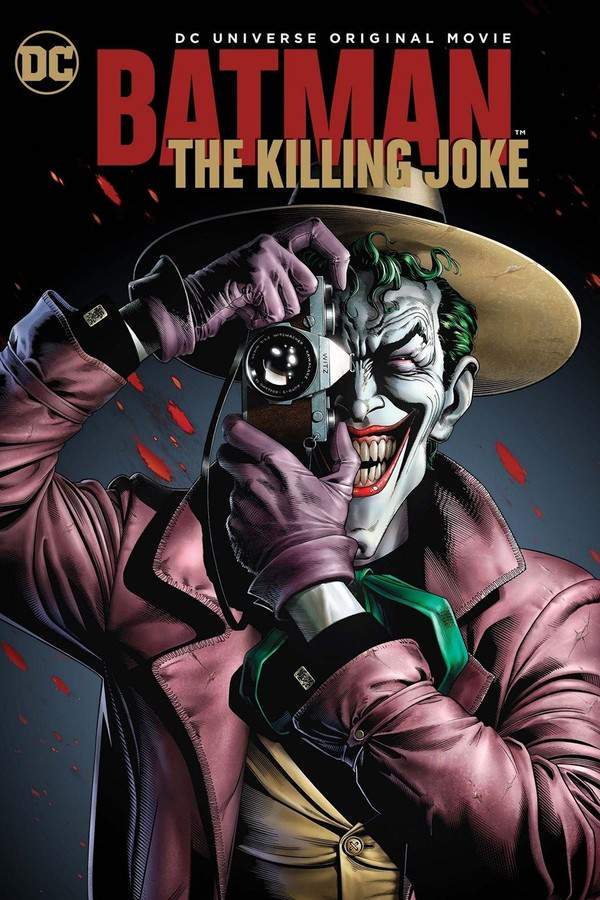
Batman: The Killing Joke 2016

Directed by

Sam Liu
Made by

Fathom Events
Batman: The Killing Joke Plot Summary
Read the complete plot summary and ending explained for Batman: The Killing Joke (2016). From turning points to emotional moments, uncover what really happened and why it matters.
This animated feature opens with Barbara Gordon, also known as Batgirl, voiced by Tara Strong, as she watches Bruce Wayne, or Batman, portrayed by Kevin Conroy, meeting with Commissioner Jim Gordon, voiced by Ray Wise. The tension escalates when Gordon shines the bat-signal to summon Batman for a robbery in progress. Batman rushes off into action, while Batgirl boldly decides to chase the robbers on her own.
The criminals are escaping in a getaway van, driven by two punks, one of whom is Paris Franz, voiced by Maury Sterling, the nephew of Gotham City’s notorious crime boss Carlos Francesco, voiced by John DiMaggio. Engaged in a thrilling pursuit, Batman hunts the crooks in the Batmobile while Batgirl leaps onto the van. An explosive confrontation occurs when Batgirl blows open the backdoor, allowing some of the criminals to shoot at Batman. Paris retaliates and shoots at Batgirl, resulting in her falling off the van. Ultimately, they manage to capture one criminal, but Batman expresses his frustration towards Batgirl for her reckless actions.
Meanwhile, Paris meets with Francesco, who is furious with his nephew for Batgirl’s interference, which led to four of his men being captured along with a loss of $100,000. Francesco threatens Paris, demanding that he retrieve the money or face deadly consequences. Paris, intent on proving himself, and his gang then plot to rob a warehouse. Batgirl, determined to prove her worth, tracks them down. Paris, having developed a dangerous obsession with her, uses knockout gas on her, but she manages to strike him before hiding in a vault as the gang escapes. After regaining consciousness and amidst police chaos, Batgirl meets Batman on a rooftop, where their discussion reveals her anger and feelings of mistrust toward his protective stance.
Following a harrowing night, the criminals gather on their boat after indulging in activities with prostitutes. Paris receives a call from Francesco, resulting in the shooting of one of his associates. As Paris and his remaining cohort attempt to evade four gunmen on a motorboat, they cunningly rig their own boat to explode, eliminating their attackers.
In a twist, Paris sends a video message to Batgirl, designed to lure her into a trap. Despite Batman’s warnings to stay away from the case, Batgirl follows the breadcrumbs he left, leading her to a disturbing scene where she discovers Francesco’s corpse. Forced to escape from two of Francesco’s men, she is saved just in time by Batman, reigniting their tensions.
On a rooftop, amidst an intense argument, Batgirl impulsively kisses Batman, leading to a moment of vulnerability where she removes her cowl and suit, revealing her full self. Their ensuing passionate encounter becomes a source of deep regret for Barbara.
The night unfolds with Batgirl alerting Batman about Paris, who orchestrates chaos with an RPG hitting the Batmobile. As Batman makes a daring jump to safety, Batgirl arrives on her motorcycle, confronting Paris fiercely but hesitating before crossing a lethal line.
Once Paris is apprehended, Batgirl realizes the wisdom of Batman’s earlier concerns for her safety. In a move to redefine her path, she meets with him as Barbara, announcing her decision to hang up her Batgirl persona.
Time passes, and Batman is seen at a crime scene with Detective Harvey Bullock, voiced by Robin Atkin Downes, discovering four deceased men bearing grotesque smiles—an unmistakable mark of the infamous Joker, voiced by Mark Hamill. The investigation leads Batman and Bullock to Arkham Asylum, where they encounter a fully masked Joker, only to realize it’s a decoy.
We delve into Joker’s past, where he was once a struggling comedian supporting his pregnant wife, Jeannie, voiced by Anna Vocino, while battling financial hardships. As the plot unfolds, the Joker’s corruption spirals from personal losses and tragedies that unfold in flashbacks, revealing the depths of his madness.
In a shocking twist, the Joker confronts Barbara in her home, inflicting a devastating injury that forever alters her life trajectory. As chaos reigns during Gordon’s abduction, Barbara defies her fate, grappling with her trauma while embroiled in the Joker’s twisted games.
The Joker, refusing to release his grasp on Gordon’s sanity, conducts a gruesome torture routine, using visceral imagery to torment him. Meanwhile, Batman races against time to save Gordon from the Joker’s horrific amusement park, reliving his own origins intertwined with Joker’s chaos.
Their confrontation escalates into a chaotic struggle amidst the Joker’s twisted narrative, which culminates in Batman flinging both himself and the Joker out of a window in a moment of mutual realization. As they share laughter amidst chaos, Batman sees the chaos of their existence reflected back at him.
The story closes with Barbara adjusting to her new reality in a wheelchair. She enters her room to her computer, with the Oracle logo marking the beginning of her new journey, setting the stage for her to embrace a different kind of heroism.
Batman: The Killing Joke Timeline
Follow the complete movie timeline of Batman: The Killing Joke (2016) with every major event in chronological order. Great for understanding complex plots and story progression.
Batgirl Watches Batman
The film begins with Barbara Gordon, known as Batgirl, observing Batman meet with Commissioner Jim Gordon. This moment sets the foundation for the partnership and tension between Batgirl and her famous mentor.
The Call to Action
Tension escalates when Commissioner Gordon uses the bat-signal to call Batman into action due to a robbery in progress. Batgirl, eager for action, decides to chase after the criminals without Batman’s guidance.
The Chase Begins
The criminals escape in a getaway van, and Batgirl launches into a high-stakes pursuit of the robbers. Meanwhile, Batman engages in a thrilling chase in the Batmobile, highlighting their contrasting approaches to law enforcement.
Explosive Confrontation
During the pursuit, an explosive confrontation occurs as Batgirl breaches the criminals' van. This reckless decision results in her being shot off the van, showcasing Batgirl's impulsive nature and the risks of her actions.
Paris Franz's Obsession
Paris Franz, the nephew of a crime boss, expresses his fury after Batgirl’s interference leads to the loss of money and men. Determined to prove his worth, he devises a plan to rob a warehouse while enraged at Batgirl.
Batgirl's Determination
Batgirl, aiming to prove her capabilities, tracks down Paris and his gang during their robbery attempt. In a twist, she is ambushed with knockout gas but manages to fight back and seeks refuge in a vault.
A Rooftop Meeting
After regaining consciousness, Batgirl meets Batman on a rooftop. Their discussion reveals her anger and sense of betrayal over his protective attitude, setting the stage for their complex relationship.
Paris's Brutal Pursuit
Amidst a chaotic night, Paris and his gang attempt to evade gunmen, leading to a violent explosion on their boat. This moment displays Paris’s desperation and his willingness to do anything to survive.
The Disturbing Revelation
Paris sends a taunting video message to Batgirl, leading her to discover the corpse of his crime boss uncle. This act intensifies her peril as she narrowly escapes from Francesco's remaining thugs.
Intense Emotions
In a moment of impulsive vulnerability, Batgirl kisses Batman during a heated argument. This encounter creates deep emotions and regrets that shape Barbara's character and her future decisions.
Paris's Reckoning
As chaos unfolds, Batgirl confronts Paris after he damages the Batmobile. This moment tests her resolve as she struggles with the temptation of crossing a deadly line.
Decision to Retire
Following the apprehension of Paris, Batgirl realizes the truth behind Batman's concerns for her safety. Determined to redefine her path, she meets Batman as Barbara to announce her decision to hang up her Batgirl persona.
The Joker's Return
Time passes, leading Batman and Detective Bullock to a crime scene filled with deceased victims. The grotesque smiles on their faces suggest the sinister arrival of the Joker, marking a transition back to a familiar enemy.
Joker's Origin Story
The narrative dives into Joker's troubled past as a struggling comedian, revealing the tragedies that shaped his madness. His decline into chaos serves as a stark contrast to the heroism of Batgirl and Batman.
Barbara's Transformation
In a harrowing encounter, Joker injures Barbara, altering her life forever. As she adjusts to her new reality in a wheelchair, she embraces her identity as Oracle, carving out a new path for her heroism.
Batman: The Killing Joke Characters
Explore all characters from Batman: The Killing Joke (2016). Get detailed profiles with their roles, arcs, and key relationships explained.
Barbara Gordon (Batgirl)
Barbara Gordon, known as Batgirl, is a strong-willed and determined character devoted to fighting crime in Gotham. Her journey reflects her struggles with self-worth and the desire to prove herself as a capable hero. Despite being driven by her ambitions, her reckless decisions often lead to severe consequences, shaping her personal growth throughout the story.
Batman (Bruce Wayne)
Batman, the iconic vigilante of Gotham, embodies complex moral lessons and responsibility. His protective nature towards Batgirl often clashes with her need for independence, revealing the challenges of mentorship in crime-fighting. Batman's character is seasoned by past traumas and continuous battles with Gotham's villains, making him a profound symbol of resilience and justice.
Joker
The Joker is a chaotic force in the film, representing the darkest aspects of humanity. His intricate backstory reveals a tragic descent into madness driven by loss and betrayal. Engaging in psychological games, he exerts power over his victims, particularly Barbara Gordon, illustrating the disturbing depths of his insanity.
Batman: The Killing Joke Settings
Learn where and when Batman: The Killing Joke (2016) takes place. Explore the film’s settings, era, and how they shape the narrative.
Time period
The film draws heavily from the darker tones of the Batman universe, with references to contemporary issues such as crime, mental health, and the consequences of violence. The presence of advanced technology, along with the cultural backdrop of a city under siege by crime, sets a current tone that resonates with modern audiences.
Location
Gotham City, Arkham Asylum
Gotham City is a dark, sprawling metropolis notorious for its high crime rate and a breeding ground for villains. It serves as the primary setting for many of Batman's adventures, characterized by its gothic architecture and complicated history. Arkham Asylum, a secure facility for the criminally insane, plays a crucial role in the lives of Gotham's villains, particularly the Joker, showcasing the intersection of crime and mental health.
Batman: The Killing Joke Themes
Discover the main themes in Batman: The Killing Joke (2016). Analyze the deeper meanings, emotional layers, and social commentary behind the film.
🦇
Heroism
The theme of heroism is explored through Batgirl and Batman's characters, highlighting their motivations and moral dilemmas. Batgirl's reckless pursuit of justice contrasts with Batman's experience-fueled caution, showcasing the complexities of striving to be a hero in a chaotic world. The narrative culminates in Batgirl's transition from her hero persona to a new identity, reflecting personal growth and resilience.
😱
Trauma
Trauma is a vital theme, particularly illustrated through Barbara Gordon's harrowing experiences with the Joker. The film navigates the profound effects of violence and psychological strain, culminating in Barbara's injury and transformation into Oracle. This theme resonates throughout the storyline, showcasing the character's struggle and adaptation to new realities in a world rife with chaos.
🔫
Crime
The film addresses the pervasive nature of crime in Gotham, illustrated through the interactions between various criminals and law enforcement. The tension between Batgirl, Batman, and the Joker emphasizes the struggle against a corrupt system, as well as the personal cost of fighting such battles. It provides commentary on the cycle of violence and the impact of crime on both individuals and society.

Batman: The Killing Joke Spoiler-Free Summary
Discover the spoiler-free summary of Batman: The Killing Joke (2016). Get a concise overview without any spoilers.
In the perpetual twilight of Gotham, a city that drips with both neon glare and shadowed dread, Batman stands as the brooding guardian of a fragile order. The film paints the metropolis as a sprawling arena for madness, where every alleyway could echo with a laugh that chills the spine. Against this backdrop, the Joker emerges not merely as a criminal mastermind but as a chaotic philosopher, intent on testing the limits of sanity by turning terror into a twisted performance art. The tone is a relentless blend of noir intensity and unsettling humor, inviting the audience to feel the thin line that separates the protector from the provocateur.
At the heart of the turmoil sits Commissioner Gordon, a steadfast figure whose dedication to justice is as much a personal crusade as it is a citywide duty. His world is one of measured resolve, yet it is constantly threatened by the Joker’s deranged games that aim to shatter his composure and plunge his family into despair. Sharing his resolve is Barbara Gordon, a determined and spirited ally whose presence adds both tension and hope to the fragile alliance. Their interactions with Batman form a complex triangle of trust, duty, and the yearning for normalcy in a place where normalcy is a rare luxury.
The story unfolds as a psychological duel, where each character must confront their own darkness while navigating the ever‑present threat of an enemy who thrives on the very act of breaking minds. The film’s style leans heavily on stark visuals, moody soundscapes, and dialogues that whisper about the fine line between heroism and insanity. As Gotham teeters on the edge of a nightmarish descent, the audience is left questioning how far a person will go to prove a point, and whether the cost of sanity can ever truly be measured.
Movies with Similar Twists and Themes
Uncover films that echo the narrative beats, emotional arcs, or dramatic twists of the one you're exploring. These recommendations are handpicked based on story depth, thematic resonance, and spoiler-worthy moments — perfect for fans who crave more of the same intrigue.


Featured on this page

What's After the Movie?
Not sure whether to stay after the credits? Find out!




Explore Our Movie Platform
New Movie Releases (2026)
Famous Movie Actors
Top Film Production Studios
Movie Plot Summaries & Endings
Major Movie Awards & Winners
Best Concert Films & Music Documentaries
Movie Collections and Curated Lists
© 2026 What's After the Movie. All rights reserved.