
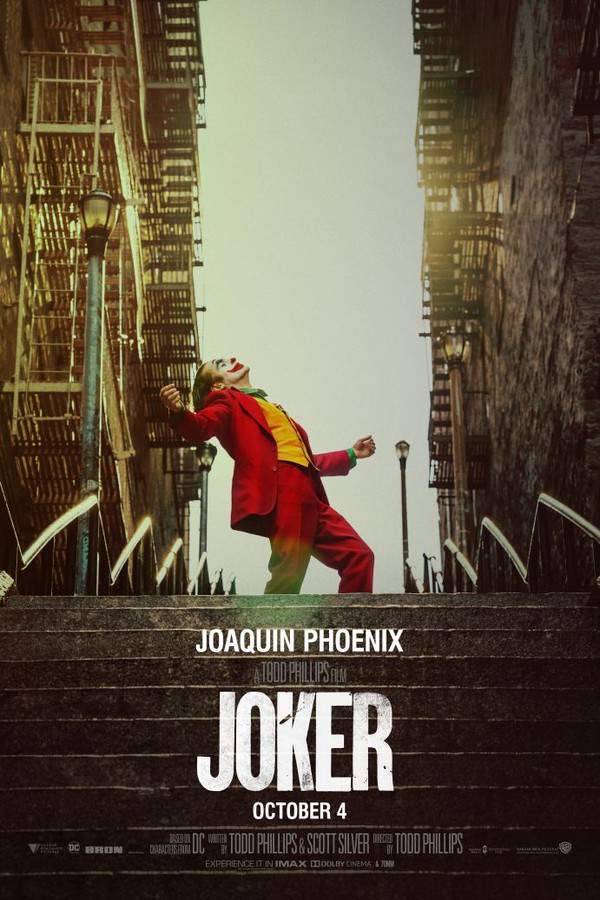
Joker 2019

Directed by

Todd Phillips
Made by

Warner Bros.
Joker Plot Summary
Read the complete plot summary and ending explained for Joker (2019). From turning points to emotional moments, uncover what really happened and why it matters.
The story unfolds in Gotham City during the tumultuous year of 1981. The central character, Arthur Fleck, portrayed by Joaquin Phoenix, works as a clown-for-hire at a company known as Ha-Ha’s. Despite his job, Arthur grapples with profound depression, which he attempts to alleviate by performing and making others laugh. His daily life takes a tragic turn when he is tasked with promoting a store by dancing and waving a sign, only to have it snatched by a group of punk teens. In his futile attempt to retrieve it, he finds himself violently assaulted in an alleyway.
Amidst a backdrop of rampant crime, unemployment, and poverty in Gotham, Arthur relies on a social worker for his medication, reflecting a society deeply troubled. A seemingly innocent moment on a bus, where he tries to entertain a child, ends in embarrassment when the child’s mother rebuffs him, highlighting his struggle for connection. His laughter, seen as inappropriate, is a symptom of his mental illness, a fact he tries to explain with a card.
Arthur returns to his dilapidated apartment, sharing space with his sickly mother, Penny, played by Frances Conroy. Evenings are spent watching Murray Franklin, the charming talk show host, played by Robert De Niro. During these moments, Arthur daydreams of captivating the audience, earning Murray’s affection, and embracing his mother in front of everyone.
His co-worker, Randall, gifts Arthur a gun for protection after a recent mugging scare. Although apprehensive, he begins to feel empowered by this newfound tool, which stands in stark contrast to his boss’s unyielding reprimands. Meanwhile, Arthur finds himself drawn to his neighbor, Sophie Dumond, played by Zazie Beetz, who despite his awkwardness, seems to understand him on a personal level. Their budding relationship, fraught with Arthur’s insecurities, leads him to invite her to his stand-up comedy performance.
As Arthur navigates the comedy scene, he feels increasingly out of place, overwhelmed by his condition that compels him to laugh excessively, making authentic comedy almost impossible. His attempts to cheer up sick children at a hospital take a dark turn when his gun accidentally slips from his pocket, resulting in severe consequences from his boss. The tipping point arrives when Arthur is attacked on a subway by three Wall Street men. Overcome by instinct, he defends himself, resulting in their brutal deaths, marking the pivotal change in his psyche.
In the aftermath, a strange sense of liberation washes over him as he dances in the restroom, embracing his identity as a clown – both literally and metaphorically. As the murders garner mixed reactions from the public, Arthur unwittingly becomes a symbol for the downtrodden, deepening his transformation into a character known as the Joker.
His quest for understanding leads him to discover troubling truths about his past, including his ties to Thomas Wayne, played by Brett Cullen, which Arthur learns may reveal his true lineage. Confronting Thomas leads to deeper feelings of betrayal and humiliation, ultimately culminating in tragedy. Arthur grapples with the realization of his mother’s abusive history, a revelation that forces him to take drastic action against her.
Following multiple events of violence, Arthur prepares for his appearance on Murray’s show, painting his face to symbolize his complete transformation. Faced with an increasingly hostile environment and reeling from a series of personal losses, Arthur’s moment on stage turns into an explosive confession, culminating in an unforeseen act of violence that shocks the audience and sends the city into chaos.
With Gotham descending into anarchy, Arthur finds exhilaration within the turmoil he has sowed, solidifying his position as a figurehead for rebellion. As his journey concludes, Arthur sits in an Arkham Asylum office, sharing a dark laugh with a new social worker, hinting at the cyclical nature of his existence. He leaves behind a trail of bloody footprints, a stark reminder of the chaos that surrounds him. The film captures a harrowing tale of a man pushed to the edge, exploring the fine line between madness and comedy.
Joker Timeline
Follow the complete movie timeline of Joker (2019) with every major event in chronological order. Great for understanding complex plots and story progression.
Arthur Fleck's Struggles Begin
In Gotham City during 1981, Arthur Fleck works at Ha-Ha's as a clown-for-hire. Despite this, he suffers from deep depression, seeking solace through laughter and attempting to connect with others around him.
Assault in the Alley
Arthur is tasked with promoting a store by dancing with a sign but faces humiliation when a group of punk teenagers steals it. In his attempt to retrieve the sign, he is violently assaulted in a dark alley, marking a turning point in his struggles.
Reliance on a Social Worker
Amidst Gotham's rampant crime and poverty, Arthur relies on a social worker for his medication. This dependency highlights his struggles in a society that increasingly marginalizes those suffering from mental illness.
Embarrassing Moment on the Bus
Arthur tries to entertain a child on a bus, hoping for a moment of connection. However, he is rebuffed by the child's mother, emphasizing his profound loneliness and the misunderstandings surrounding his laughter.
Living with His Mother
Arthur shares a small apartment with his ailing mother, Penny, where they often watch Murray Franklin's talk show together. During these moments, Arthur imagines a different life filled with acceptance and love, contrasting his harsh reality.
A Gift of a Gun
After being frightened by a mugging, Arthur's co-worker Randall gifts him a gun for protection. Initially apprehensive, Arthur finds a strange sense of empowerment in the weapon, which starkly contrasts with his boss's disdain.
Connection with Sophie
Arthur develops a romantic interest in his neighbor Sophie Dumond, who seems to understand him like no one else. Their relationship, however, is complicated by Arthur's deep insecurities and struggles with social interaction.
Accident at the Hospital
During a visit to cheer up sick children at a hospital, Arthur's mental state worsens as his gun slips from his pocket. This incident results in grave repercussions from his boss, further stressing his fragile psyche.
The Subway Incident
Arthur is attacked on the subway by three Wall Street men, triggering a primal response within him. In a moment of self-defense, he kills them, a shocking act that marks a significant shift in his mental state and identity.
Embracing the Clown
After the subway incident, Arthur feels a strange liberation and begins to fully embrace his identity as a clown. This transformation symbolizes his acceptance of madness and the chaotic nature of his existence.
Discovering His Past
Arthur uncovers unsettling truths about his past, including a potential connection to Thomas Wayne. This information leads him to confront Wayne, igniting feelings of betrayal and deepening his emotional turmoil.
Tragic Confrontation with His Mother
Faced with revelations about his mother's abusive history, Arthur experiences a profound sense of betrayal. This culminates in a drastic and tragic confrontation with her, marking a critical point in his descent into madness.
Murray's Show Appearance
Arthur prepares for his appearance on Murray Franklin's show, painting his face as a symbolic gesture of his full transformation into the Joker. His on-stage appearance escalates into violence, shocking both the audience and the city.
Gotham in Chaos
Following Arthur's explosive confession on the show, Gotham descends into chaos as his violent actions inspire rebellion. The city becomes a battleground of conflicting ideologies and symbols of hope and despair.
Final Moments in Arkham
The film concludes with Arthur in an Arkham Asylum office, sharing a dark laugh with a new social worker. This moment underscores the cyclical nature of his existence and the chaos he leaves in his wake.
Joker Characters
Explore all characters from Joker (2019). Get detailed profiles with their roles, arcs, and key relationships explained.
Arthur Fleck
Arthur Fleck is a deeply troubled man living in Gotham City, struggling with mental illness and societal rejection. His desire for acceptance and love is consistently thwarted by the harsh realities of his environment, leading him down a dark path. Over time, he transforms from a lonely clown into the notorious villain, the Joker, as he embraces his true identity.
Murray Franklin
Murray Franklin is a popular talk show host who represents the mainstream society that Arthur yearns to connect with. Though he is charismatic and admired, his dismissal of Arthur's struggles ultimately plays a pivotal role in Arthur's transformation. Murray becomes both an idol and an adversary in Arthur's journey towards self-realization.
Sophie Dumond
Sophie Dumond is Arthur's neighbor and interest, embodying the rare moments of kindness Arthur experiences. Despite his social awkwardness, Sophie offers him a glimpse of hope and connection. However, her perceptions of Arthur become complicated as his reality increasingly diverges from her understanding.
Penny Fleck
Penny Fleck is Arthur's mother and a significant influence on his troubled life. Stricken with illness, she relies on Arthur for care while burdened by her own traumatic past. The unraveling of her history deeply affects Arthur, revealing layers of emotional conflict that contribute to his eventual breakdown.
Joker Settings
Learn where and when Joker (2019) takes place. Explore the film’s settings, era, and how they shape the narrative.
Time period
1981
The year 1981 was marked by economic uncertainty and rising crime rates in many urban areas, including Gotham City. This tumultuous backdrop plays a crucial role in shaping the characters' experiences and societal interactions. It was a time of significant social unrest, contributing to feelings of hopelessness and despair among the population.
Location
Gotham City, Arkham Asylum
Gotham City is a fictional metropolis characterized by its dark atmosphere, economic struggles, and high crime rates. Known for its iconic landmarks and troubled history, Gotham serves as the perfect backdrop for stories of lost souls and societal decay. Arkham Asylum, located within Gotham, is infamous for housing some of the most dangerous criminals and has become synonymous with psychological turmoil.
Joker Themes
Discover the main themes in Joker (2019). Analyze the deeper meanings, emotional layers, and social commentary behind the film.
🎭
Madness
The theme of madness is central to the film, exploring the thin line between sanity and insanity. Arthur Fleck's mental health struggles are highlighted throughout his journey, illustrating how societal neglect can push individuals towards the brink. The film invites viewers to reflect on the consequences of a world that overlooks the mentally ill.
💔
Isolation
Isolation is a pervasive theme in Joker, as Arthur grapples with profound feelings of loneliness and rejection. Despite his desire for connection, he often finds himself misunderstood and ostracized, which amplifies his despair. This theme serves to emphasize the critical need for empathy and community support in combating the effects of mental illness.
🔥
Rebellion
Rebellion is showcased through Arthur's transformation into the Joker, symbolizing the uprising against a society that has marginalized and abused him. As he embraces chaos and violence, he becomes a beacon for others who feel similarly oppressed, igniting a sense of collective rebellion among Gotham's disenfranchised citizens.

Joker Ending Explained
Unravel the ending of Joker (2019) with our detailed explanation. Understand the final scenes, character fates, and unresolved questions.
At the climax of the film, Arthur Fleck, fully embracing his transformation into the Joker, arrives at Murray Franklin’s show dressed in full clown makeup. Throughout the film, Arthur’s descent into madness has been fueled by a lifetime of social alienation, mental illness, and the corrupt, indifferent city around him. When he takes the stage, he begins by performing morbid jokes and confesses to the subway murders—acts motivated by his anger at societal neglect and the rich elite who feed off Gotham’s suffering. His breakdown intensifies as he blames Murray for mocking him and reflects his feelings of being misunderstood and discarded by society. In a violent outburst, Arthur shoots Murray on live television, turning the show into a scene of chaos and slaughter. This act sparks a riot across Gotham, as the city erupts into an outright rebellion; mobs loot, burn, and kill, embodying the chaos that Arthur’s actions have incited. During this chaos, the young Bruce Wayne witnesses the murder of his parents, Thomas and Martha, in Crime Alley, an event that establishes the origin story of Batman. Arthur is eventually captured but is seemingly unbothered as he relishes in the chaos he’s caused, dancing freely in the streets with a bloody smile painted on his face, symbolizing his complete embrace of his identity as the Joker. The film ends with Arthur in a psychiatric facility, laughing uncontrollably when questioned by a psychiatrist, indicating that his sense of madness and violence remains unchecked. His joy in the destruction and his refusal to share the reasons for his laughter suggest that he has found a twisted sense of liberation in his nihilistic worldview, leaving his future actions and the chaos he’s unleashed open to interpretation.
Joker Spoiler-Free Summary
Discover the spoiler-free summary of Joker (2019). Get a concise overview without any spoilers.
In a rain‑slick, neon‑washed Gotham that feels as cracked as the lives of its inhabitants, the city itself becomes a character—a bruised backdrop of economic decline, street‑level desperation, and an unsettling quiet that hints at something waiting to break. The year 1981 casts a stale, retro‑grime over the streets, where flickering billboards and the distant hum of traffic form a dissonant soundtrack for a society teetering on the edge of chaos. This atmosphere is both gritty and strangely theatrical, inviting viewers to wonder how far the collective misery can stretch before it erupts.
Arthur Fleck drifts through this world as a party clown whose painted smile masks a deep, unspoken pain. He hustles between low‑pay gigs, clinging to a fragile hope that one night on a late‑night talk show could launch him into the applause he craves. Living in a cramped apartment with his ailing mother, Penny, Arthur’s days are punctuated by a relentless struggle to keep his medication, a fleeting sense of humor, and the ever‑present yearning for genuine connection. The film paints his internal battle with tender melancholy, letting his nervous laughter echo as both a symptom and a survival mechanism.
Around him, Gotham’s restless citizens drift in and out of his orbit—an aspiring therapist, a sympathetic neighbor named Sophie Dumond, and the charismatic talk‑show host Murray Franklin who represents the glittering promise of acceptance. Their brief intersections hint at the fragile bridges Arthur tries to build, while the city’s looming unrest whispers that the line between comedy and tragedy is thinner than it appears. The tone remains darkly comic, balancing unsettling realism with stylized flair, ensuring that even before any decisive moment unfolds, the audience feels the weight of a man poised on the cusp of an inevitable, unsettling transformation.
Movies with Similar Twists and Themes
Uncover films that echo the narrative beats, emotional arcs, or dramatic twists of the one you're exploring. These recommendations are handpicked based on story depth, thematic resonance, and spoiler-worthy moments — perfect for fans who crave more of the same intrigue.


Featured on this page

What's After the Movie?
Not sure whether to stay after the credits? Find out!




Explore Our Movie Platform
New Movie Releases (2025)
Famous Movie Actors
Top Film Production Studios
Movie Plot Summaries & Endings
Major Movie Awards & Winners
Best Concert Films & Music Documentaries
Movie Collections and Curated Lists
© 2025 What's After the Movie. All rights reserved.