
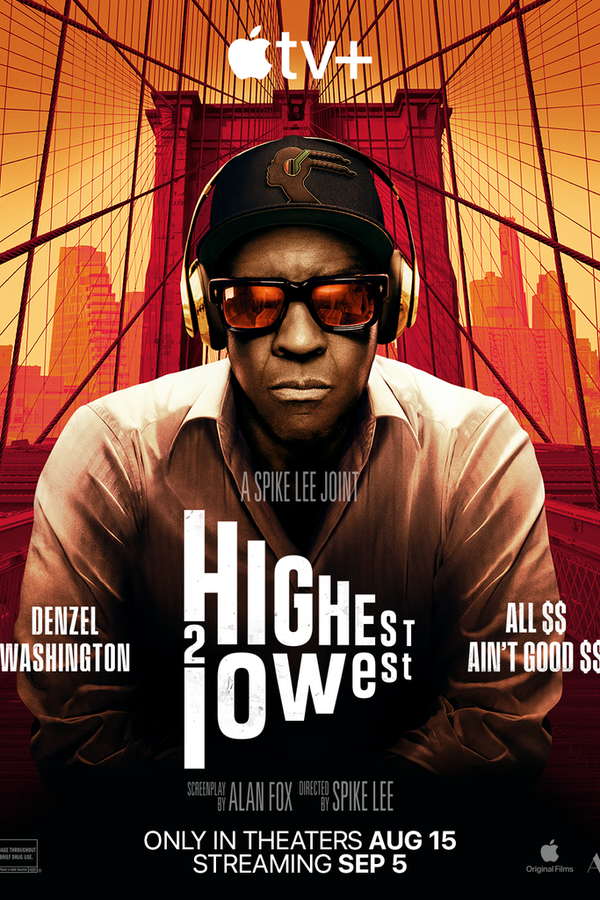
Highest 2 Lowest 2025

Directed by
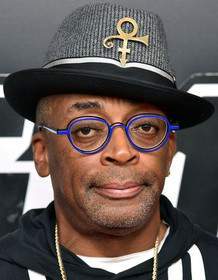
Spike Lee
Made by

40 Acres & A Mule Filmworks
Highest 2 Lowest Plot Summary
Read the complete plot summary and ending explained for Highest 2 Lowest (2025). From turning points to emotional moments, uncover what really happened and why it matters.
David King Denzel Washington is a New York City music mogul, celebrated for having the best ears in the business and the founder of Stackin’ Hits Records. After selling his majority stake years earlier, he plans to buy back control by purchasing one of his two partners’ shares. To raise the cash for the deal, he puts up most of his personal wealth—his Dumbo penthouse and a prestigious collection of contemporary Black art—collateralizing everything in a high-stakes bid to reclaim leadership of the label.
On the day the deal is set to close, an anonymous call from a kidnapper arrives, demanding 17.5 million Swiss-franc notes for the safe return of his son Trey. King immediately involves the authorities and, in a tense, practical moment with his wife Pam King Ilfenesh Hadera, agrees to pay the ransom, even though doing so risks the cash he needs for the business move. The plan is put into motion, and the couple wrestles with a moral and financial tightrope: save a child at the expense of a deal that could define Stackin’ Hits’ future.
The kidnapper’s misstep quickly becomes the turning point of the night. Trey’s best friend Kyle Christopher Elijah Wright is abducted instead of Trey—the son of King’s loyal driver and confidant Paul Christopher Jeffrey Wright. Kyle’s father is stunned by the swap, but the kidnapper’s demands remain the same: the money must be delivered in the exact form requested, and time is not on their side. The tension among the King household intensifies as Paul, who has kept the family rhythm and security intact, watches a crisis unfold that could tear apart both their personal life and business.
Detective Higgins Dean Winters leads the probe, weighing PR risk against the brutal arithmetic of ransom and repayment. Despite the public spectacle and the pressure from lenders who fear fraud—the money was supposed to go toward buying out partners, not saving a friend or family member—King’s resolve hardens. Trey and Paul both plead for help to save Kyle, and Pam’s support anchors King even as the clock ticks down. After a long night of soul-searching, King makes the fateful choice: pay the ransom.
The money is packed into an Air Jordan backpack, and the chase unfolds through the city. The police tag the bag with a GPS beacon and King boards a subway toward Yankee Stadium as instructed. A tense sequence follows: an order to move between train cars, an emergency brake triggered by a clever accomplice, and a bag that slips through ironwork to the street. A mopeds’ relay carries the bag through the streets as the group evades pursuit and the parade crowds, only to find that the bag’s contents have been cleaned out by the time the hunt resumes. Kyle is ultimately released in a nearby park, unharmed but shaken, and the public reaction to King’s decision swells into a wave of newfound heroism as a handful of Stackin’ Hits tracks begin climbing the charts.
Yet the practical implications of King’s actions loom large. Two weeks—two weeks—to repay the debt to lenders looms as a hard deadline, and they threaten to seize the collateral if the funds don’t materialize. The contract terms clash with the ransom action, revealing a friction between artistry, risk, and finance. The wrenching question remains: was the ransom a sacrifice King could justify to save a life, or a dangerous deviation that could undermine the company’s future and his own standing?
Kyle’s memory of a distinctive hip-hop track becomes a crucial clue. King, listening to a playlist of Trey’s demos, recognizes the song and deduces that the kidnapper is Yung Felon [A$AP Rocky], an aspiring rapper who idolizes the man he once ignored. When this lead reaches law enforcement, the case risks stalling, and King and Paul decide to press the matter themselves. They track down Felon’s address, a dangerous choice that pulls them into Felon’s orbit and into a dangerous confrontation. In a tense studio sequence, Felon defends his actions by explaining he saw King as a father figure who had ignored him for years, resorting to kidnapping as a misguided attempt to force a connection.
A gunfight erupts as Felon flees to an elevated subway platform. King pursues, and the confrontation spills onto the train, culminating in a moment where King incapacitates Felon, leaving him unconscious between train cars. The dramatic turn leaves Paul wounded in the process, his left eye injured in the firefight but alive, and the two men confronting the moral implications of what happened and what might come next.
Felon ultimately takes a plea deal, accepting a 25-year prison sentence in exchange for a face-to-face with King. Their meeting becomes a crucible for power, ambition, and recognition: Felon tries to convince King to sign him, arguing that both would profit greatly from an expanded, lucrative partnership. King, however, reveals a different path. He has left Stackin’ Hits to launch a smaller, more intimate label—one that could nurture artists with a closer, more personal touch. Felon’s anger registers in a burst of disappointment, underscoring the fraught relationship between industry power and genuine artistry.
Back at their gleaming penthouse, the Kings—David, Pam, and Trey—enter a new phase of their lives. They audition Sula, a young singer-songwriter discovered by Trey. Her performance of the song “Highest 2 Lowest” is a moment of revelation and possibility, the kind of moment that redefines a label’s future. The Kings are captivated by her voice and the raw honesty of her work, and they extend an invitation to sign her to their evolving, more intimate label.
Throughout the ordeal, the family dynamic remains a thread that ties the narrative together: a music empire built on trust and vision, tested by a dangerous act, and reimagined by the possibility of a more personal, artist-centered future. The story moves from high-stakes finance and public perception to intimate, creative risk, as the King family channels their experiences into a new chapter for Stackin’ Hits—one that honors their roots while inviting new voices into the fold. The result is a taut, emotionally driven portrait of ambition, loyalty, and the fragile balance between commerce and art.
Highest 2 Lowest Timeline
Follow the complete movie timeline of Highest 2 Lowest (2025) with every major event in chronological order. Great for understanding complex plots and story progression.
Plan to regain majority ownership
David King, a NYC music mogul and founder of Stackin' Hits, aims to buy back majority ownership from his two partners. To raise the cash for the deal, he pledges almost all his personal assets as collateral, including his Dumbo penthouse and a prized collection of contemporary Black art. The move signals a high-stakes gambit to fend off a rival label's outright buyout.
Ransom demand arrives
On the day the deal is set, an anonymous kidnapper calls, demanding 17.5 million in Swiss francs for Trey's safe return. King immediately contacts the police and, with wife Pam, agrees to pay the ransom despite risking the cash needed for the buyout. The crisis shifts from boardroom strategy to a life-and-death negotiation.
Kyle is kidnapped; Trey is safe
The kidnapper has mistakenly taken Kyle, Trey's best friend and Paul's son, while Trey is found safe. The revelation reframes the crisis as a danger within the Kings' inner circle. King and Pam brace for a broader, more personal threat.
Reluctant decision to ransom payment
Despite concerns about the corporate optics, King agrees to pay the ransom. Paul's pleas and the pressure on the company’s image push him to sacrifice the cash needed for the buyout. The decision sets the stage for a tense street-level ransom delivery.
Ransom packed and dispatched
King packs the ransom money into an Air Jordan backpack with a GPS tracker attached by the police. He heads to the Brooklyn subway stop for the exchange, trying to outpace the kidnapper while keeping authorities in the loop. The scene blends private desperation with public law enforcement procedures.
Ambush on the train; Kyle freed
Following the kidnapper's instructions, the bag is passed between subway cars as the pursuit leads toward Yankee Stadium. An emergency brake triggers, the bag falls through the ironwork, and it is seized by a bagman before being dispersed by rival accomplices on mopeds. When police finally recover the bag, the money is gone, and Kyle is released in a nearby park.
King becomes a public hero; lenders tighten the purse strings
King's decisive actions make him a public symbol of resilience, with Stackin' Hits songs climbing the charts. Yet the lenders warn that the 17.5 million must be repaid within two weeks, arguing the funds were intended for the buyout and that diverting them could constitute fraud. The looming deadline compounds the pressure on King's financial empire.
A lead points to Yung Felon
Kyle cannot identify his kidnapper, but he recalls hearing a distinctive hip-hop track. King, listening to Trey's playlist of demos, recognizes the song as associated with Yung Felon and surmises the artist's involvement. The police dismiss the lead, prompting King and Paul to pursue the lead themselves.
Confrontation at the studio; chase on the elevated train
King and Paul track down Yung Felon to his recording studio. In an impromptu rap battle, Felon explains he saw King as a father figure and kidnapped Trey out of spite. A gunfight erupts, Felon flees onto an elevated subway train, and King pursues him onto the platform, ultimately subduing him.
Felon takes a plea; King refuses to sign
Felon accepts a 25-year prison sentence as part of a plea deal, agreeing to meet with King face-to-face. During the meeting, Felon tries to persuade King to sign him to the label, arguing they could both profit. King reveals he has left Stackin' Hits to form a smaller label and passes on Felon's offer.
Sula debuts on the new label
Back at the penthouse, the Kings audition Sula, a young singer-songwriter discovered by Trey. Her performance of Highest 2 Lowest wows them, and they offer her a contract with the new smaller label. The moment signals a fresh start for Kings' music venture.
Highest 2 Lowest Characters
Explore all characters from Highest 2 Lowest (2025). Get detailed profiles with their roles, arcs, and key relationships explained.
David King (Denzel Washington)
David King is a New York City-based music mogul and founder of Stackin' Hits Records. He aims to regain majority ownership by buying out his partners, risking his Dumbo penthouse and a prized art collection as collateral. When Kyle is kidnapped, he must decide between honoring the ransom and protecting his business deal, exposing a man torn between power and family duty.
Pam King (Ilfenesh Hadera)
Pam is David’s wife and a stabilizing influence who weighs family safety against the pressures of the business world. She agrees to pay the ransom to protect her son and find a path forward, even as the decision risks the company’s finances and public image. Her loyalty anchors the family through the crisis.
Trey King (Aubrey Joseph)
Trey is the Kings’ son and a budding musician who helps shape the label’s creative direction with his demo tracks. His kidnapping sets off the scramble between family and business, as he and Paul plead with King to save Kyle. Trey's presence as a young artist underscores the human stakes behind the industry's power plays.
Paul Christopher (Jeffrey Wright)
Paul is David King’s driver and confidant, also the father of Kyle. Loyal and practical, he assists in the pursuit of Yung Felon and navigates the personal fallout of the crisis, including an injury he sustains during the climactic gunfight. His long-standing partnership with King illustrates a bond forged in trust and shared risk.
Kyle Christopher (Elijah Wright)
Kyle is Trey's best friend and the son of Paul. He becomes an unintended victim when the kidnapper mistakes him for Trey, sparking a tense manhunt. Although he cannot identify his kidnapper, his memory of a distinctive hip-hop track helps drive the investigation forward.
Yung Felon (A$AP Rocky)
Felon is an ex-convict and aspiring rapper who stages the kidnapping to leverage a signing with King. He explains his motivations in a revealing rap battle, revealing how being ignored by King pushed him toward desperate actions. He ultimately pleads to a 25-year sentence, a twist of fate that reshapes the label’s future.
Detective Higgins (Dean Winters)
Detective Higgins leads the investigation into the kidnapping, coordinating with the police and tracking the ransom’s movements. His steady, procedural approach contrasts with the personal drama unfolding inside the Kings’ orbit, helping to bring the case toward resolution.
Highest 2 Lowest Settings
Learn where and when Highest 2 Lowest (2025) takes place. Explore the film’s settings, era, and how they shape the narrative.
Location
New York City, Dumbo, Brooklyn
Set in New York City, the story moves from the Dumbo penthouse to Brooklyn’s transit network and public spaces. The city serves as a backdrop for high-stakes finance, media attention, and the complex loyalties within a family and a music empire. Its dense streets, iconic landmarks, and crowded venues amplify the tension of the ransom and the ambition driving Stackin' Hits.
Highest 2 Lowest Themes
Discover the main themes in Highest 2 Lowest (2025). Analyze the deeper meanings, emotional layers, and social commentary behind the film.
🎶
Music Industry
Music is both livelihood and leverage in the narrative. The film shows how deals, loans, and public opinion shape choices as much as personal values. As the ransom unfolds, the business calculus often overrides artistic impulses. The climb of Stackin' Hits’ songs contrasts with the personal costs of crime and loyalty.
💼
Power & Money
Wealth and control drive the plot, with David King's attempt to reclaim majority ownership hinging on risky collateral. The arrangement ties personal fortunes to corporate risk, creating pressure to choose between honesty and expediency. Lenders threaten severe consequences if the funds are misused, spotlighting the fragility of financial leverage.
🕊️
Family & Loyalty
Family bonds and loyalty test the characters as they navigate a crisis that pits affection against ambition. The kidnapping thrusts Trey's safety against Kyle's life, forcing decisions that reveal what each character values most. The resolution redefines loyalties—from business partners to a found family within the label and the Kings' own circle.

Highest 2 Lowest Ending Explained
Unravel the ending of Highest 2 Lowest (2025) with our detailed explanation. Understand the final scenes, character fates, and unresolved questions.
David King’s desperate scramble to rescue what he thinks is his kidnapped son ends up exposing a far more tangled web of class tension and misplaced priorities. When the ransom call arrives, David rushes to pay the $17.5 million, believing he is saving Trey. The police, spurred by the King family’s fame, swarm the house and focus their suspicion on Paul Christopher—David’s childhood friend and chauffeur—because of Paul’s criminal record and, overtly, his Muslim faith. The detectives never consider that the boy might have simply run away on his own.
In fact, Trey never vanished. He had left the basketball gym early, handed his green headband to his best friend Kyle, and later discovered Kyle missing. The kidnappers, mistaking Kyle for Trey, abducted the chauffeur’s son. When Kyle is rescued, the ransom demand suddenly shifts from “my son” to “my friend’s son,” forcing David to confront the stark financial divide between his opulent world and Paul’s modest life. He hesitates, realizing that the money he borrowed to buy out his partner would be lost, and that paying the ransom would reward violent crime. Yet his public image—and the pressure from his wife Pam—pushes him to hand over the cash, even though Paul can’t possibly repay it.
The ransom exchange goes awry; the bag of cash disappears, and only a low‑level courier is caught. While recovering in the hospital, Kyle hums a line from a song he heard while captive. That lyric belongs to a rising rapper‑singer, Yung Felon, whose work David has been scouting for his label. The recognition triggers David’s “golden ear” and points straight to the kidnapper. With Paul’s lingering connections to the street network, they trace Yung Felon’s hideout. In a tense showdown, David and Paul—both armed—confront the young artist. Yung fires, wounding Paul, then flees onto a train. David pursues, subdues him, and the police haul him in.
During the arrest, Yung explains his motive: he idolized David, wanted a chance to audition his music, and, frustrated by endless rejection and the glossy lives flaunted online, decided to force a meeting by kidnapping Kyle. Ironically, the publicity from the crime catapults his tracks to the top of the charts, granting him the fame he craved—but at a steep price. He accepts a plea deal, a 25‑year prison sentence, and spitefully hopes David will sign him after his release. David, however, refuses both the money and the moral compromise, turning Yung away.
The fallout forces David to reevaluate his ambition to buy out his partner, Patrick Bethea, and become the majority shareholder of Stackin’ Hit Records. The ransom money erodes the loan he’d taken for that purpose, and his investors demand repayment within a week. Realizing that his pursuit of corporate dominance has alienated his family and clouded his love for music, David sells his stakes in the label and launches a modest, family‑run venture. He invites Pam and Trey to take active roles, offers Paul and Kyle modest positions (which Paul declines, preferring a different path), and begins scouting genuinely overlooked talent.
The film closes on a quiet moment: a young singer named Sula performs a soulful demo for David. Moved by her authentic voice—precisely the type of artist the profit‑driven industry neglects—David signs her as the first act of his new label, symbolizing a return to artistic integrity and a reconnection with the community he once set aside. In the end, the “highest” ambitions are humbled by the “lowest” realities, and David chooses a path grounded in genuine music rather than relentless profit.
Highest 2 Lowest Spoiler-Free Summary
Discover the spoiler-free summary of Highest 2 Lowest (2025). Get a concise overview without any spoilers.
In the restless rhythm of New York City’s music scene, the business is as much about ear‑for‑talent as it is about power, legacy, and the relentless push for the next hit. Skyscrapers tower over bustling studios, and the streets pulse with the echo of beats that can launch careers—or topple empires. Within this high‑stakes arena, reputation is currency, and the stakes rise with every contract signed and every chart‑topping single.
David King stands at the apex of that world, a legendary mogul famed for having the “best ears in the business.” As the founder of a major label, he has built an empire on intuition, artistic vision, and shrewd negotiations, all while juggling the demands of a high‑profile career and a family that anchors him. His wife, Pam, and their son, Trey, provide a private sanctuary amidst the constant public scrutiny that comes with his name. Yet even the most seasoned executives can find their carefully calibrated lives unsettled when personal ambition collides with unforeseen threats.
When a ruthless ransom scheme suddenly targets the heart of his world, David is forced into a crucible that tests his principles as sharply as any boardroom showdown. The dilemma pits his instinct to protect those he loves against the imperatives of the empire he has spent a lifetime constructing. The tension crackles with the same intensity as a live recording session, blending suspense with a palpable moral weight that keeps the audience perched on the edge of every decision.
The film balances sleek, urban style with an undercurrent of raw humanity, inviting viewers to watch a man whose greatest battles are not just fought on the streets of Manhattan but within his own conscience. In a world where every note can change destinies, the story teases the question of what price is worth paying to keep the music—and the people who matter—alive.
Movies with Similar Twists and Themes
Uncover films that echo the narrative beats, emotional arcs, or dramatic twists of the one you're exploring. These recommendations are handpicked based on story depth, thematic resonance, and spoiler-worthy moments — perfect for fans who crave more of the same intrigue.



Featured on this page

What's After the Movie?
Not sure whether to stay after the credits? Find out!




Explore Our Movie Platform
New Movie Releases (2025)
Famous Movie Actors
Top Film Production Studios
Movie Plot Summaries & Endings
Major Movie Awards & Winners
Best Concert Films & Music Documentaries
Movie Collections and Curated Lists
© 2025 What's After the Movie. All rights reserved.