
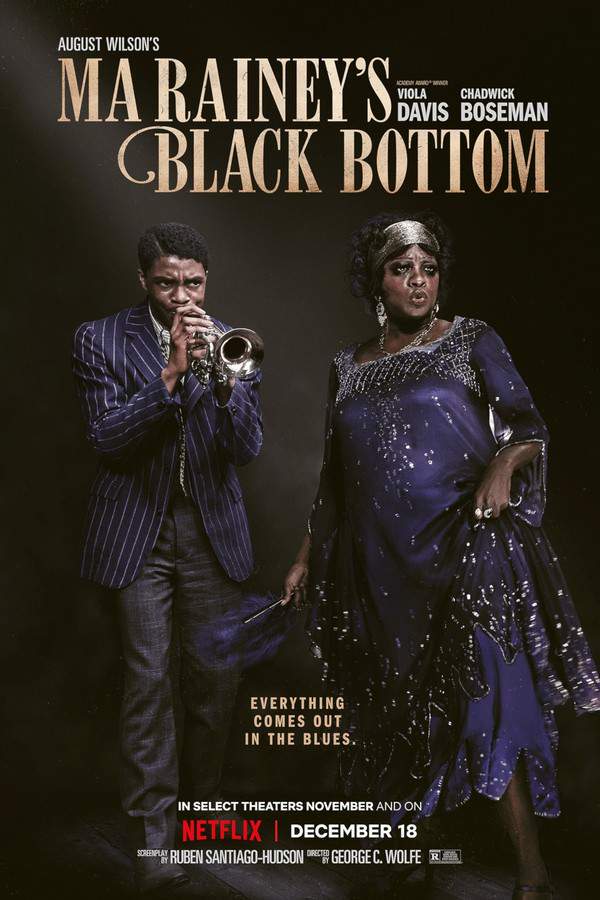
Ma Rainey's Black Bottom 2020

Directed by

George C. Wolfe
Made by

Netflix
Ma Rainey's Black Bottom Plot Summary
Read the complete plot summary and ending explained for Ma Rainey's Black Bottom (2020). From turning points to emotional moments, uncover what really happened and why it matters.
On July 2, 1927, the powerful and determined blues singer, Ma Rainey, finds herself at the center of a tumultuous recording session orchestrated by white producers. Her manager, Irvin, has scheduled this pivotal session at Paramount recording studios in Chicago. The seasoned members of the Georgia Jazz Band—Toledo, Cutler, and Slow Drag—arrive punctually, but Ma’s late arrival ignites tensions as her producer, Mel Sturdyvant, grows increasingly exasperated.
Joining the ensemble is the overambitious trumpeter, Levee Green, who is eager to showcase his original compositions and secure a record deal for himself. Unfortunately, his aspirations create friction among his bandmates, who disapprove of his ambition. When Ma finally arrives, she is accompanied by her girlfriend, Dussie Mae, and her nephew, Sylvester. Almost immediately, she clashes with Sturdyvant and Irvin, insisting on her demands, including the provision of Coca-Cola, which had not been supplied. Unhappy, she refuses to start recording until Slow Drag and Sylvester fetch her drink.
Ma’s insistence that Sylvester, who stutters, deliver the opening words of their album leads to further frustration among the musicians. The group struggles through recording “Ma Rainey’s Black Bottom” with multiple takes, each time growing more irritable. In an intimate moment, Ma confides in Cutler that her white producers only appreciate her talent, viewing her otherwise as “just a dog in the alley.”
Amidst the chaos, Levee engages in a romantic encounter with Dussie Mae, only to be interrupted by Slow Drag. After many frustrating attempts, the band finally completes a track, only to face disappointment as equipment failures render their efforts unrecorded. In the heat of the moment, the band blames Levee, suspecting him of carelessness due to his distraction with Dussie. This leads to an intense discussion wherein Cutler recounts a painful tale of racial humiliation.
Levee dismisses the story, expressing a deep disillusionment with faith, claiming that if God existed, he would show concern for Black lives. This confrontation escalates when Cutler and Levee engage in a physical altercation, with Levee momentarily wielding a knife in defense.
Though the recording session eventually concludes, the atmosphere continues to sour as Ma decides to fire Levee, fearing that his ambition threatens the group’s unity. In a disheartening turn of events, Levee later seeks validation for his music from Sturdyvant, only to find that his groundbreaking work will not be supported, leading him to a tragic mental breakdown. When a heated altercation with Toledo occurs over an accident involving Levee’s shoes, it culminates in a horrific act of violence as Levee fatally stabs Toledo.
As Cutler and Slow Drag flee the scene in terror, a remorseful Levee is left with Toledo’s lifeless body. In the aftermath, Sturdyvant capitalizes on Levee’s songs, but chooses to record them with all-white musicians, leaving behind the essence of the band that once was.
Ma Rainey's Black Bottom Timeline
Follow the complete movie timeline of Ma Rainey's Black Bottom (2020) with every major event in chronological order. Great for understanding complex plots and story progression.
Recording Session Begins
On July 2, 1927, the powerful blues singer Ma Rainey arrives at Paramount recording studios in Chicago for a crucial recording session. Her manager, Irvin, has orchestrated the event, hoping to make a hit with Ma's powerful voice and the seasoned Georgia Jazz Band.
Band Arrives
The members of the Georgia Jazz Band, including Toledo, Cutler, and Slow Drag, arrive on time and are prepared to work. However, their anticipation turns to frustration when Ma arrives late, prompting tensions to rise within the group.
Ma's Demands
As soon as Ma Rainey arrives, she insists on specific demands that need to be met before she will begin recording. Among her requests is a Coca-Cola, which prompts the band members to send Slow Drag and her nephew Sylvester to fetch the drink, further delaying the session.
Recording Challenges
The band struggles through the recording of 'Ma Rainey's Black Bottom' as their frustrations mount with each failed take. Ma insists on Sylvester, who has a stutter, to deliver the opening words, creating additional tension within the group.
Ma's Reflection
In a private moment, Ma confides in Cutler her feelings of being devalued by her white producers, revealing the painful truth that they only appreciate her talent while viewing her through a derogatory lens. This moment offers insight into her struggles as a Black artist in a racially charged environment.
Levee and Dussie Mae
During the tumultuous session, Levee Green, the ambitious trumpeter, engages in a romantic connection with Ma's girlfriend, Dussie Mae. Their private moment is interrupted, highlighting the tension and distractions present in the studio.
Recording Disruptions
After numerous attempts, the band manages to record a track, but a technical failure prevents the music from being saved. The frustration peaks as the group begins to assign blame, targeting Levee for allegedly being careless due to his romantic distractions.
Cutler's Story
In a heated exchange, band member Cutler recounts a painful story of racial humiliation, seeking understanding and solidarity from the group. However, Levee dismisses Cutler's experiences, expressing his disillusionment with faith and existence.
Physical Altercation
Tensions escalate into a physical confrontation between Cutler and Levee, culminating in a dangerous moment when Levee brandishes a knife. This violent outburst underscores the growing friction among the band as personal and professional conflicts collide.
Ma Fires Levee
Following the tumultuous session, Ma Rainey decides to fire Levee for his disruptive ambition, fearing it threatens the harmony of the band. Her decision reflects the ongoing struggle for control and artistic vision within the group.
Levee's Disillusionment
In a desperate bid for validation, Levee seeks support from producer Mel Sturdyvant for his compositions. However, he discovers that Sturdyvant has no intention of backing his groundbreaking work, leading him into despair and a mental breakdown.
Tragic Violence
After a verbal altercation with Toledo regarding an incident involving Levee’s shoes, the confrontation escalates tragically. In a moment of uncontrollable rage, Levee fatally stabs Toledo, marking a devastating turning point in the narrative.
Escape and Remorse
With horror and disbelief, Cutler and Slow Drag flee the scene in fear, leaving Levee alone with the consequences of his actions. Overcome with remorse, Levee is left to grapple with the reality of his violent choice and its irrevocable impact.
Sturdyvant's Betrayal
In the aftermath of the violence, producer Mel Sturdyvant seizes the opportunity to exploit Levee's songs. However, he chooses to record them with all-white musicians, forsaking the essence of the band that originally created the music.
Ma Rainey's Black Bottom Characters
Explore all characters from Ma Rainey's Black Bottom (2020). Get detailed profiles with their roles, arcs, and key relationships explained.
Ma Rainey (Viola Davis)
Ma Rainey is a strong-willed and influential blues singer who refuses to be marginalized in a world dominated by white producers. Her fierce independence and determination command respect, yet she grapples with the systemic racism that undermines her artistry.
Levee Green (Chadwick Boseman)
Levee Green is an ambitious young trumpeter yearning for recognition in the music industry. His drive often puts him at odds with his bandmates, revealing his insecurity and deep-seated frustrations regarding his identity and aspirations.
Cutler (Colman Domingo)
Cutler serves as a voice of reason within the band, often trying to mediate the escalating tension between his peers. He has a deep understanding of the challenges they face and a profound sense of loyalty to Ma, while navigating his own struggles with identity.
Dussie Mae (Taylour Paige)
Dussie Mae is Ma Rainey’s girlfriend who brings warmth and complexity to the narrative. Her relationship with Levee offers insight into the personal lives of the characters, highlighting the intersection of love, ambition, and the harsh realities they face.
Toledo (Glynn Turman)
Toledo is a wise and seasoned musician who provides a perspective on the struggles of Black artists. His experiences shape his views on racial inequality and contribute to the emotional weight of the band’s dynamics.
Ma Rainey's Black Bottom Settings
Learn where and when Ma Rainey's Black Bottom (2020) takes place. Explore the film’s settings, era, and how they shape the narrative.
Time period
1927
The movie takes place during the summer of 1927, a time when jazz and blues were gaining prominence in America. This period witnessed significant cultural shifts for African American artists, who faced challenges in the music industry amid racial tensions and exploitation.
Location
Paramount recording studios, Chicago
The Paramount recording studios in Chicago serve as the main setting for the movie, representing the bustling music industry of the late 1920s. Known for its significant contributions to the recording of jazz and blues music, it stands as a backdrop to the tensions between artists and producers during this pivotal era.
Ma Rainey's Black Bottom Themes
Discover the main themes in Ma Rainey's Black Bottom (2020). Analyze the deeper meanings, emotional layers, and social commentary behind the film.
🎼
Music & Ambition
Music serves as a powerful force in 'Ma Rainey's Black Bottom,' capturing the struggles and aspirations of Black artists. The ambition of characters like Levee contrasts with the established presence of Ma, highlighting tensions between personal goals and collective harmony.
⚖️
Racial Inequality
The film delves into the theme of racial inequality, depicting the exploitation of Black artists by white producers. It underscores the frustrations of the characters, who are often seen as commodities rather than valued musicians, reflecting broader societal issues.
💔
Conflict & Betrayal
Conflict arises not only during recording sessions but also within the relationships among band members. Levee's personal ambition leads to betrayal and violence, ultimately highlighting the fragility of trust among individuals facing external pressures.

Ma Rainey's Black Bottom Ending Explained
Unravel the ending of Ma Rainey's Black Bottom (2020) with our detailed explanation. Understand the final scenes, character fates, and unresolved questions.
In the film’s final moments, Levee, after being fired by Ma Rainey, storms into the rehearsal room and, overwhelmed with anger, kicks down a mysterious door he had been fixating on throughout the story. When he opens it, he finds only a small, empty alley, a stark and disappointing sight that symbolizes his sense of hopelessness and the barriers he faces. Director George C. Wolfe intended this scene as a metaphor for America’s pervasive racism, illustrating that despite Levee’s relentless pursuit of his dreams, he is ultimately met with a dead end—a reality grounded in systemic oppression that offers no escape or progress. Boseman’s powerful portrayal emphasizes Levee’s desperation and longing to understand what lies beyond, only to confront the harsh truth of his limitations.
Later, after being dismissed by Ma Rainey, Levee’s volatile frustration reaches a breaking point when he accuses Toledo of stepping on his shoes. This small incident ignites a tragic act of violence; Levee stabs Toledo in the back, and as the old pianist bleeds out, Levee looks on with tears in his eyes. This heartbreaking conclusion underscores the destructive consequences of rage fueled by systemic injustice and personal failures. It highlights how brutality and violence often ensue in oppressed communities, especially when hopes are dashed and dreams remain unfulfilled. Levee’s cry of remorse over Toledo’s death leaves viewers with a haunting sense of loss and the tragic toll of systemic violence.
The film’s ending shifts dramatically with a scene that contrasts sharply with the earlier violence. Instead of black performers, a group of all-white musicians records an eerily stiff rendition of the song “Jelly Roll,” a moment that symbolizes how the creative work of Black artists like Levee is often appropriated and repurposed without recognition. This overlay serves as a critique of the historical exploitation of Black cultural contributions, emphasizing that even today, the fruits of Black musicians’ labor are frequently taken and reshaped for white audiences, obscuring their origins. Wolfe’s choice to include this scene reinforces the tragic reality that Black artists have long been marginalized, their contributions dismissed or rendered invisible, especially when used in ways that ignore their storytelling and history.
Overall, the film’s ending leaves a lingering impression—an unapologetic critique of racial injustice and the dehumanizing systems that trap Black musicians and creators. It reminds us that, despite progress, the legacy of exploitation and inequality persists, making the powerful performances and symbolic moments—like Levee’s desperate quest, his tragic downfall, and the cultural silencing of Black music—resonate long after the credits roll. Ma Rainey’s final defiance, her sharp words to the studio, and Levee’s tragic fate encapsulate a broader commentary on the resilience and vulnerability of those oppressed by an unyielding system, emphasizing that their stories continue to evoke reflection and change.
Ma Rainey's Black Bottom Spoiler-Free Summary
Discover the spoiler-free summary of Ma Rainey's Black Bottom (2020). Get a concise overview without any spoilers.
In the bustling heart of 1920s Chicago, a historic recording studio becomes a crucible where music, commerce, and race intersect. The city’s smoky clubs and bustling streets pulse with the raw power of the blues, while the studio’s polished walls conceal a world where black artistry is both celebrated and exploited. Within this charged atmosphere, a single recording session promises to capture a moment that could reshape the future of the genre.
Ma Rainey arrives as a towering figure of the blues, her reputation forged by a voice that commands both reverence and fear. Determined to protect her artistic integrity, she confronts the white producer’s expectations and the practical demands of her manager, Irvin, whose ambitions for commercial success sometimes clash with her own. Their negotiations reveal a delicate balance between control and collaboration, underscoring the broader struggle for autonomy faced by black performers of the era.
Enter Levee Green, a young, restless trumpeter whose hunger for recognition drives him to push the boundaries of the session. His fresh compositions and fierce drive illuminate a generational tension: the seasoned members of the Georgia Jazz Band, anchored in tradition, watch his aspirations with a mixture of admiration and apprehension. As the music swells, underlying currents of resentment and hope surface, hinting at the complex layers of loyalty, pride, and the yearning to be heard that bind the group together.
The film’s tone is dense with the sound of creaking piano keys, the bite of cigarette smoke, and the relentless rhythm of a city that never sleeps. It weaves an intimate portrait of creativity under pressure, where every note carries the weight of history and every pause suggests unspoken truths. Against the backdrop of a single, fraught day, the characters navigate a world where the pursuit of artistic truth is both a personal battle and a collective revolution, leaving the audience eager to hear what emerges from the tension‑filled studio.
Movies with Similar Twists and Themes
Uncover films that echo the narrative beats, emotional arcs, or dramatic twists of the one you're exploring. These recommendations are handpicked based on story depth, thematic resonance, and spoiler-worthy moments — perfect for fans who crave more of the same intrigue.

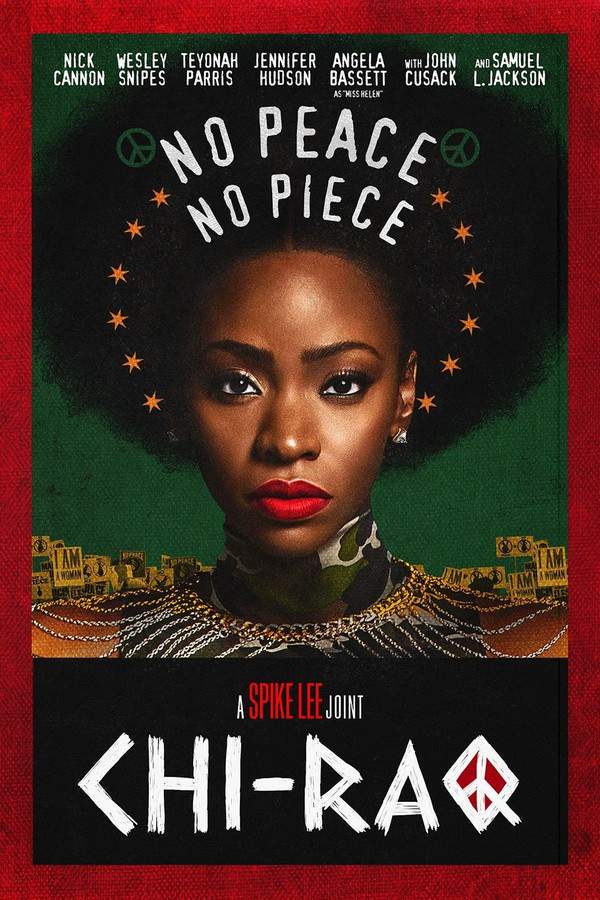
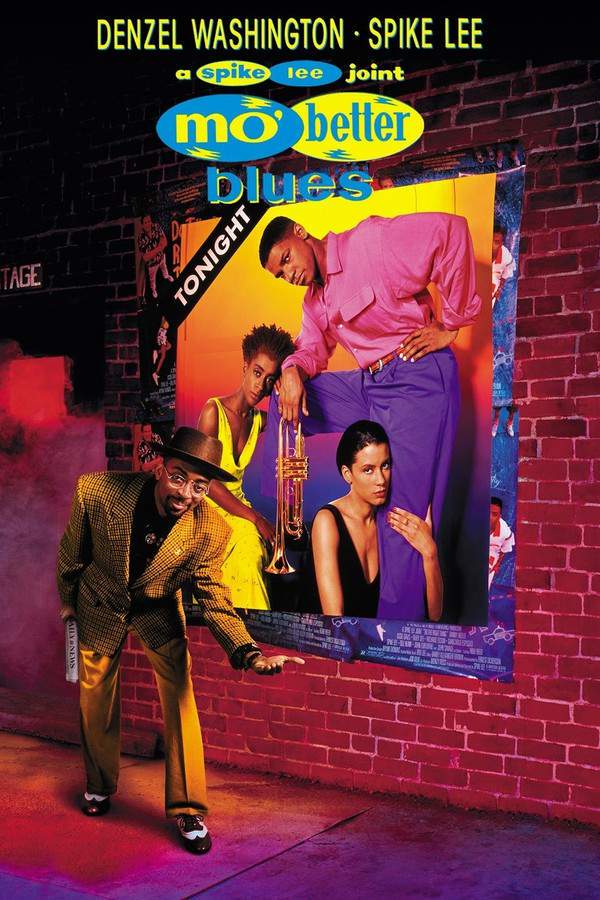



Featured on this page

What's After the Movie?
Not sure whether to stay after the credits? Find out!




Explore Our Movie Platform
New Movie Releases (2025)
Famous Movie Actors
Top Film Production Studios
Movie Plot Summaries & Endings
Major Movie Awards & Winners
Best Concert Films & Music Documentaries
Movie Collections and Curated Lists
© 2025 What's After the Movie. All rights reserved.