
The Beguiled 2017

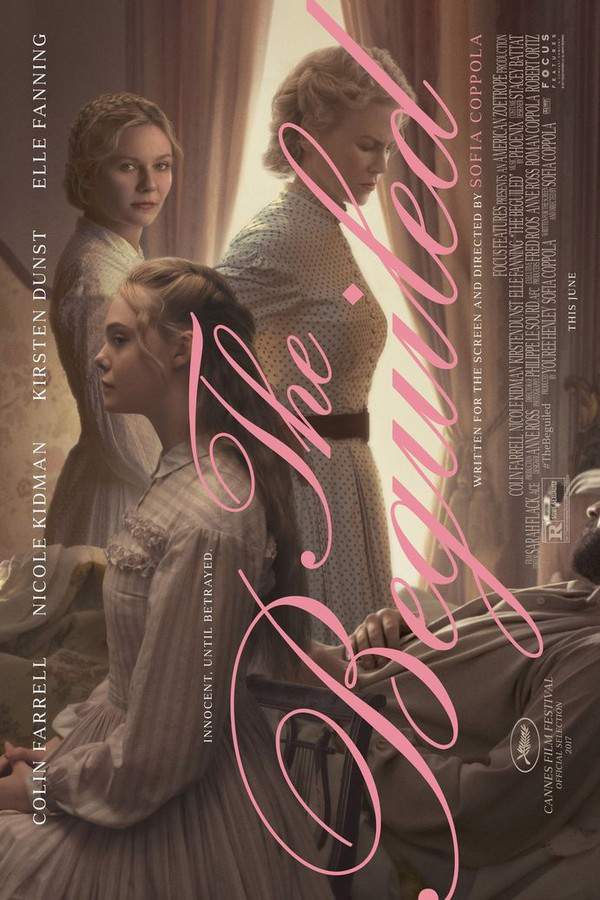
During the American Civil War, a wounded Union soldier seeks shelter at an isolated Southern girls' boarding school. As he recovers under the care of the headmistress and her students, a complex dynamic develops, fueled by unspoken desires and growing rivalries. The women's protective facade begins to crack, revealing a volatile mix of compassion and envy that puts everyone's loyalties to the test and threatens to shatter the school’s delicate balance.


Does The Beguiled have end credit scenes?
No!
The Beguiled does not have end credit scenes. You can leave when the credits roll.
Meet the Full Cast and Actors of The Beguiled
Explore the complete cast of The Beguiled, including both lead and supporting actors. Learn who plays each character, discover their past roles and achievements, and find out what makes this ensemble cast stand out in the world of film and television.








External Links and Streaming Options
Discover where to watch The Beguiled online, including streaming platforms, rental options, and official sources. Compare reviews, ratings, and in-depth movie information across sites like IMDb, TMDb, Wikipedia or Rotten Tomatoes.










Ratings and Reviews for The Beguiled
See how The Beguiled is rated across major platforms like IMDb, Metacritic, and TMDb. Compare audience scores and critic reviews to understand where The Beguiled stands among top-rated movies in its genre.

The Movie Echo Score
The Beguiled presents a taut, visually sumptuous drama whose strengths lie in its craft and performances. Reviewers highlight the film’s measured pacing and period detail, noting both captivating atmosphere and occasional narrative lulls. The ensemble’s nuanced portrayals and the director’s surface-tension approach contribute to an engaging, if restrained, viewing. Despite some uneven momentum and modest replay appeal, the film’s blend of visual style and emotional undercurrents yields a largely positive impression.
The Movie Echo Score Breakdown for The Beguiled

Art & Craft
In terms of art and craft, The Beguiled excels in its period production and compositional clarity. Critics praise the film’s precise framing, rich color palette, and faultless set design, noting scenes that feel both authentic and elegantly arranged. Some observers mention that pacing occasionally undercuts the energy, yet the overall visual construction and editing rhythms consistently reinforce the film’s refined aesthetic. The net effect is a polished visual experience.

Character & Emotion
In terms of character and emotion, the film benefits from committed performances that convey underlying tensions. The ensemble’s subdued interactions and carefully measured dialogue foster a sense of unease and intrigue, while the chemistry among the leads anchors the unfolding drama. A few moments reveal accent inconsistencies and restrained intensity, yet the overall depth of the portrayals sustains the film’s emotional weight. The end result is an effective character study.

Story & Flow
When it comes to story and flow, The Beguiled presents a deliberate pacing that builds tension but sometimes feels slow. Observers note plot coherency with occasional abrupt shifts and a final act that intensifies drama. While the structured adaptation offers thematic depth in its period setting, some uneven momentum and predictability temper engagement. Overall, the narrative succeeds in maintaining intrigue despite its occasional storytelling lull.

Sensory Experience
In terms of sensory experience, the film stands out with its atmospheric score and cohesive visual style. Reviews highlight its rich sound design and an evocative soundtrack that underlie the Southern Gothic setting while complementing the understated color palette. Though the musical presence is occasionally subdued, the combination of immersive audio cues and meticulously crafted imagery creates a consistently engaging aural and visual environment.

Rewatch Factor
Regarding rewatch factor, the film’s measured pacing and subdued tone yield limited immediate replay appeal. While audiences appreciate its atmospheric build and payoff in the climactic turn, the restrained emotional intensity and occasional narrative lag may deter repeated viewings. Some viewers find the final twist compelling enough to warrant another watch, but overall the tight focus and deliberate unfolding temper long-term allure.

77
Metascore
6.1
User Score


79%
TOMATOMETER

48%
User Score

8.5 /10
IMDb Rating

59
%
User Score

3.3
From 336 fan ratings

2.00/5
From 5 fan ratings
Take the Ultimate The Beguiled Movie Quiz
Challenge your knowledge of The Beguiled with this fun and interactive movie quiz. Test yourself on key plot points, iconic characters, hidden details, and memorable moments to see how well you really know the film.
The Beguiled (2017) Quiz: Test your knowledge of the 2017 film The Beguiled with these ten varied questions covering characters, plot points, and thematic details.
What is the profession of Martha Farnsworth at the start of the film?
Full Plot Summary and Ending Explained for The Beguiled
Read the complete plot summary of The Beguiled, including all major events, twists, and the full ending explained in detail. Explore key characters, themes, hidden meanings, and everything you need to understand the story from beginning to end.
Martha Farnsworth [Kirsten Dunst] runs a quiet, secluded girls’ school in Virginia, tucked away from the turmoil of the Civil War. By 1864 the halls that once rang with activity are nearly empty: almost all the students, teachers, and even enslaved workers have departed, leaving only Farnsworth, five remaining students, and one steadfast teacher, Edwina Morrow [Nicole Kidman]. The isolation weighs heavy, and every glance through the ivy-draped windows feels charged with unspoken rules, loyalties, and danger.
While out in the woods hunting mushrooms, the youngest pupil, Amy [Oona Laurence], stumbles upon a wounded Union corporal, John McBurney [Colin Farrell], who has deserted after a battle and hurt his leg badly. Amy brings the stranger back to the school, where he collapses beneath the shock of pain and exposure. The women quickly corral him in a spare room, and Farnsworth tends to his injuries with clinical calm, though the house soon fills with a curious, undeniable tension. The sight of the handsome outsider awakens a mix of welcome and desire among the girls and their teacher, a mood that thickens the air with competing motives and simmering rivalries.
As McBurney recovers, a delicate tug-of-war begins over what to do with him. Some residents want to hand him over to Confederate authorities, yet Farnsworth chooses a slower, more transitional approach: let him heal before any decision is made, framed as a Christian mercy that shadows a more practical calculation about safety and control. The Confederate soldiers eventually come calling, but Farnsworth does not reveal the intruder’s presence, hoping to keep the fragile balance intact and to preserve the possibility of a quiet resolution.
During his convalescence, the women and girls begin to vie for his attention, showering him with gifts, jewelry, and elaborate meals. McBurney responds with charm, a response that Farnsworth discerns as strategic—an attempt to win their favor in a delicate diplomatic game rather than a simple crush. Yet the dynamics at the house shift as his role evolves from patient to willing participant in the household’s routines, even helping out in the garden as he regains strength.
When Farnsworth finally tells him he should prepare to leave in a few days, McBurney pleads to stay as a gardener, a plea that recasts his status within the school’s micro-society. He confesses a love for Edwina Morrow, a moment that briefly flares into expectation, but a night of upheaval follows: Edwina discovers him in bed with Alicia [Elle Fanning], the rebellious eldest pupil, and the room grows heavy with consequences. McBurney tries to placate Edwina, yet her anger pushes him, and in a perilous show of misfortune he tumbles down the stairs, breaking his already injured leg and losing his advantage and dignity in one cruel moment. Alicia’s quick, protective claim that McBurney forced himself on her complicates matters, and Farnsworth decides that the only way to save McBurney’s life is to amputate the damaged leg.
When he awakens and realizes what has happened, McBurney is devastated and furious, convinced the women have acted out of spite. He is locked inside, but a moment of cunning enables him to seize the key from Alicia and slip out, stealing Farnsworth’s gun and creating a dangerous standoff. He pursues Amy toward the gate, only to be redirected by Farnsworth’s steady resolve and her calm, persuasive voice that saves the girl from harm at a tense shed by the road. The school’s leadership then faces a stark choice: how to handle a man who has tested their boundaries and upended their quiet world.
In the aftermath, the group grapples with their own fears and collective responsibility. They decide to neutralize the threat by poisoning his dinner with poisonous mushrooms, a plan born from necessity and fear rather than malice. Separately, Edwina follows McBurney toward his room, and here a charged, intimate moment unfolds as she initiates sex, complicating loyalties and intensifying the moral calculus for everyone involved. Although the others anticipate danger, Edwina’s lack of awareness about the plan to kill him means the mushrooms reach the table unmarked by suspicion. McBurney consumes his meal and collapses, the room falling into a shocked hush as the poison takes hold.
The group confronts the consequences of their decision with a meticulous, almost clinical detachment. They dress McBurney’s body for burial, folding him into a shroud as if preserving him in a private ceremony rather than acknowledging the finality of his death. Edwina, though devastated, bears witness to the grim weight of the choices the women have made. The body is carried to the road and strapped to the gate, a grim signal meant to draw the next Confederate soldiers who pass by, a final, eerie message from a house that has turned its own history into a national signal of fear, protection, and unresolved longing.
In the end, the school remains a fragile sanctuary altered by the encounter with a single man who arrived under cover of war, only to become a catalyst for a larger contest over power, affection, and the difficult ethics of mercy. The narrative lingers on the emotional cost to each woman—their vulnerabilities, their fears, and the uneasy quiet that follows a night of choices that none of them can fully justify—leaving readers to weigh duty against desire in a landscape where every decision carries a price.

Watch Trailers, Clips & Behind-the-Scenes for The Beguiled
Watch official trailers, exclusive clips, cast interviews, and behind-the-scenes footage from The Beguiled. Dive deeper into the making of the film, its standout moments, and key production insights.
The Beguiled Themes and Keywords
Discover the central themes, ideas, and keywords that define the movie’s story, tone, and message. Analyze the film’s deeper meanings, genre influences, and recurring concepts.
The Beguiled Other Names and Titles
Explore the various alternative titles, translations, and other names used for The Beguiled across different regions and languages. Understand how the film is marketed and recognized worldwide.
Similar Movies To The Beguiled You Should Know About
Browse a curated list of movies similar in genre, tone, characters, or story structure. Discover new titles like the one you're watching, perfect for fans of related plots, vibes, or cinematic styles.











Quick Links: Summary, Cast, Ratings, More

What's After the Movie?
Not sure whether to stay after the credits? Find out!




Explore Our Movie Platform
New Movie Releases (2025)
Famous Movie Actors
Top Film Production Studios
Movie Plot Summaries & Endings
Major Movie Awards & Winners
Best Concert Films & Music Documentaries
Movie Collections and Curated Lists
© 2025 What's After the Movie. All rights reserved.