
The Current War: Director's Cut 2019

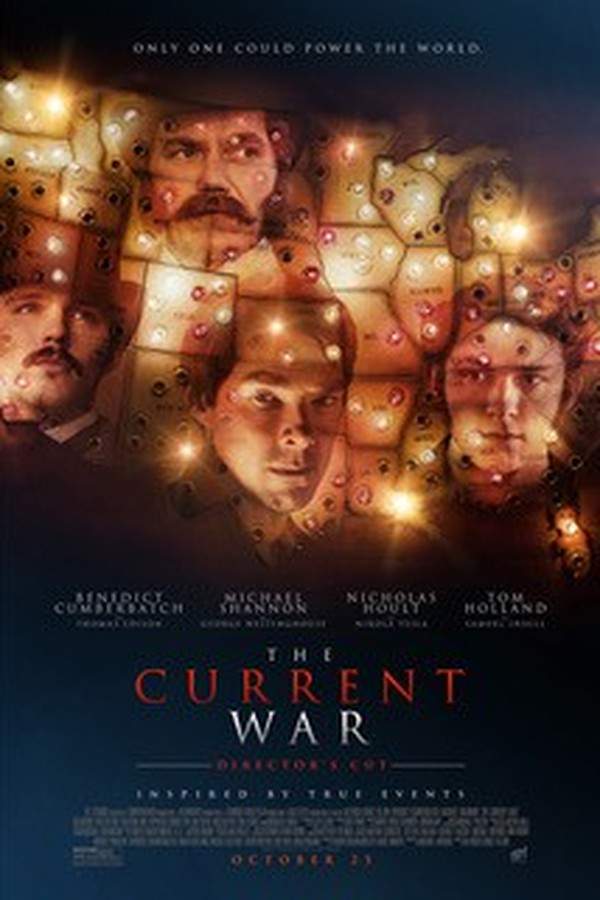
A fierce rivalry erupts between Thomas Edison and George Westinghouse as they vie to power America. Edison's direct current (DC) system faces a challenge from Westinghouse's alternating current (AC) technology, with the brilliance of Nikola Tesla driving the innovation. Their escalating competition sparks a dramatic corporate feud, forever changing the landscape of industry and the path to success.

Does The Current War: Director's Cut have end credit scenes?
No!
The Current War: Director's Cut does not have end credit scenes. You can leave when the credits roll.
Meet the Full Cast and Actors of The Current War: Director's Cut
Explore the complete cast of The Current War: Director's Cut, including both lead and supporting actors. Learn who plays each character, discover their past roles and achievements, and find out what makes this ensemble cast stand out in the world of film and television.

Benedict Cumberbatch
Thomas Alva Edison

Tom Holland
Samuel Insull

Michael Shannon
George Westinghouse

Nicholas Hoult
Nikola Tesla

Simon Manyonda
Lewis Latimer

Katherine Waterston
Marguerite Westinghouse

Woody Norman
Dash (Younger)
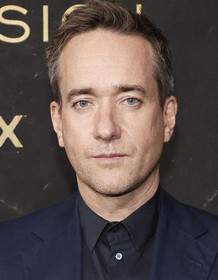
Matthew Macfadyen
J.P. Morgan

Tuppence Middleton
Mary Edison

Louis Ashbourne Serkis
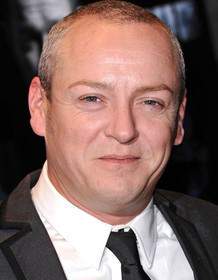
Craig Conway
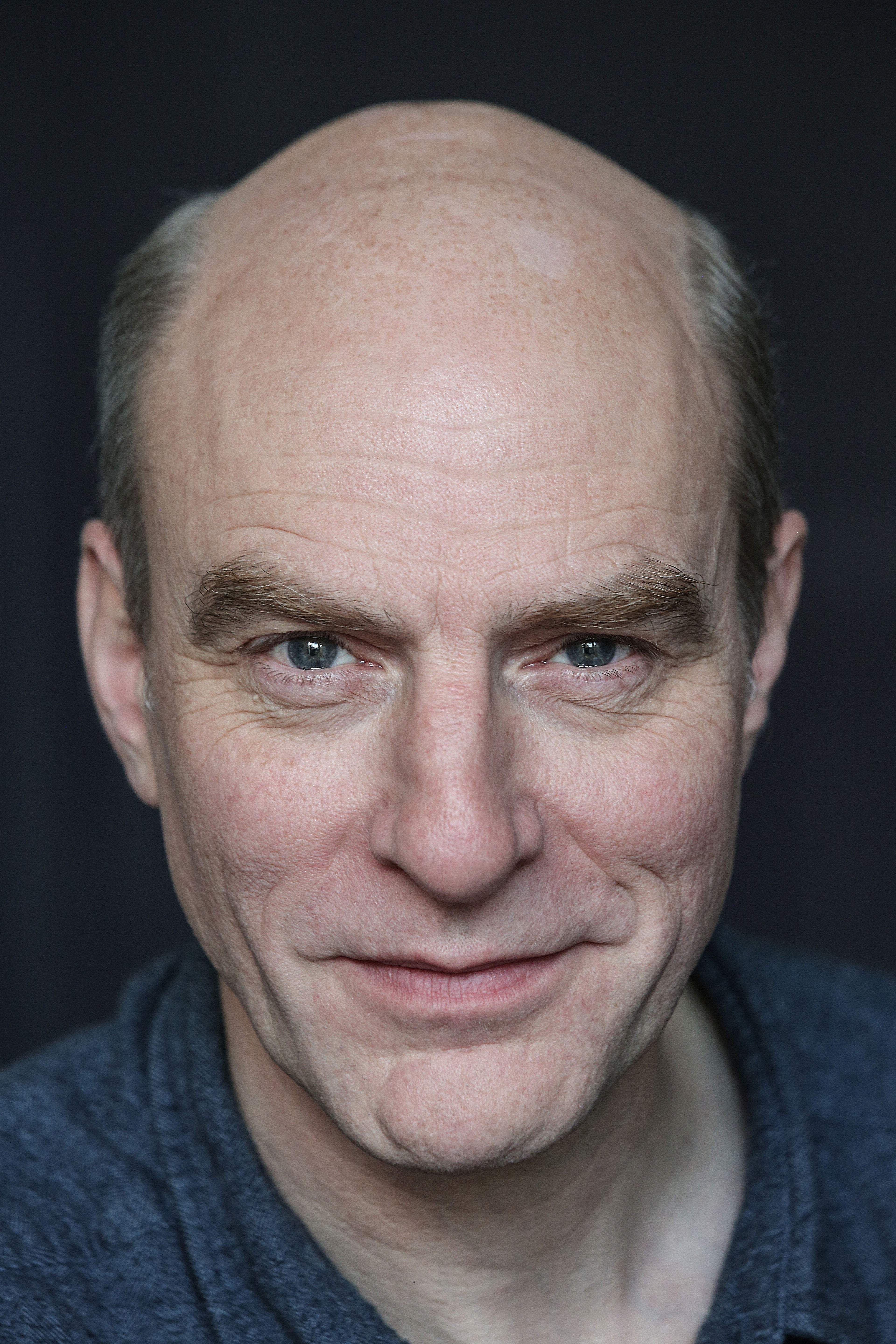
Simon Kunz

Celyn Jones
Sherman Quincy

Amy Marston
Emma Davies
Female Reporter

Conor MacNeill
Tom Bell
Abigail Johns
Benjamin Schnau
Damien Molony
David Morley Hale
Liza Ross
Nancy Crane
Oliver Powell
Leo
Robert Jezek
Stanley Townsend
Franklin Pope
Tim Steed
External Links and Streaming Options
Discover where to watch The Current War: Director's Cut online, including streaming platforms, rental options, and official sources. Compare reviews, ratings, and in-depth movie information across sites like IMDb, TMDb, Rotten Tomatoes or Metacritic.







Ratings and Reviews for The Current War: Director's Cut
See how The Current War: Director's Cut is rated across major platforms like IMDb, Metacritic, and TMDb. Compare audience scores and critic reviews to understand where The Current War: Director's Cut stands among top-rated movies in its genre.

The Movie Echo Score
Although The Current War: Director’s Cut exhibits strong production values and performances, it is hampered by uneven narrative focus and pacing issues. Critics and audiences alike praise the direction’s visual flair and the lead performances, yet many note a superficial depth to its dramatic conflicts. While the film offers engaging historical moments and striking set pieces, its inconsistent momentum and lack of sustained narrative tension limit its overall impact.
The Movie Echo Score Breakdown for The Current War: Director's Cut

Art & Craft
In terms of art and craft, The Current War exhibits a confident visual design tempered by uneven editing. Reviews highlight the elegant cinematography and detailed production design, noting the period sets and costume choices create verisimilitude. However, rapid cuts and sometimes over-stylized montage sequences interrupt the film’s visual rhythm. Overall, the film’s aesthetic strengths are undermined occasionally by overly frenetic editing decisions.

Character & Emotion
In terms of character and emotion, the film benefits from committed lead performances that occasionally outshine its dramatic depth. The portrayals of Edison and Westinghouse receive consistent praise for energy and nuance, with critics noting strong chemistry between Cumberbatch and Shannon. Yet some reviews describe the character development as superficial, limiting emotional resonance. Ultimately, the actors’ liveliness injects vitality even as the narrative underexplores their inner journeys.

Story & Flow
When it comes to story and flow, the narrative is often regarded as uneven and lacking sufficient dramatic tension. Observers praise the film’s informative depiction of the historical rivalry but frequently cite a loss of momentum in the second half and a surface-level treatment of key conflicts. Pacing criticisms include abrupt scene transitions that disrupt engagement. Overall, the storytelling delivers informative context but struggles to sustain coherent dramatic drive.

Sensory Experience
In terms of the sensory experience, the film’s production design and visual style earn commendation for their period authenticity and texture. Critics highlight well-composed framing and nuanced costume work that enhance immersion. However, sound design and musical score receive fewer mentions, and certain editing choices undermine auditory and visual cohesion. Overall, the sensory elements present a richly created world that is occasionally disrupted by uneven post-production decisions.

Rewatch Factor
In terms of rewatch factor, the film offers compelling historical scenes but limited replay appeal due to inconsistent pacing. Many viewers note that the uneven narrative momentum and shallow character treatments reduce lasting engagement. The energetic moments remain memorable, yet the erratic dramatic structure diminishes enthusiasm for repeat screenings.

Metascore
tbd
User Score


61%
TOMATOMETER

79%
User Score

6.5 /10
IMDb Rating

67
%
User Score

2.50/5
From 2 fan ratings
Take the Ultimate The Current War: Director's Cut Movie Quiz
Challenge your knowledge of The Current War: Director's Cut with this fun and interactive movie quiz. Test yourself on key plot points, iconic characters, hidden details, and memorable moments to see how well you really know the film.
The Current War Quiz: Test your knowledge about the rivalry between Thomas Edison and George Westinghouse in the world of electricity.
What year was the key meeting between Edison and JP Morgan to discuss funding?
Full Plot Summary and Ending Explained for The Current War: Director's Cut
Read the complete plot summary of The Current War: Director's Cut, including all major events, twists, and the full ending explained in detail. Explore key characters, themes, hidden meanings, and everything you need to understand the story from beginning to end.
In 1880, a visionary inventor, Thomas Edison, finds himself financially strained but determined as he reveals his groundbreaking electric light-bulb. His ambitious vision includes supplying power to various American neighborhoods utilizing Direct Current (DC), a cleaner and more affordable alternative to gaslight, albeit limited by its range and the need for an elaborate wiring system. Edison’s goal centers on electrifying the first district in Manhattan, but he faces the challenge of securing two locations to accommodate his dynamos.
Seeking validation, Edison travels to the White House to unveil his innovative Phonograph to the President of the United States, joined by the influential financier J.P. Morgan, a regular backer of his ventures. During this pivotal meeting, Morgan proposes a partnership with a substantial investment of $150,000, but Edison categorically declines. His convictions run deep; he refuses to exploit his inventions to endanger lives. Instead, Morgan decides to support Edison’s electrification initiative for the Manhattan district, leading to a significant milestone when Edison lights up the New York Stock Exchange on September 4, 1882.
Meanwhile, the formidable George Westinghouse, an affluent businessman and inventor based in Pittsburg, seeks to learn about Edison’s innovations. After attempting to arrange a dinner with Edison, he is met with snubbery when Edison chooses to bypass Pittsburg without stopping, even as Westinghouse and his wife eagerly await his arrival. This rejection stirs Westinghouse to champion Alternating Current (AC), which boasts superior efficiency and can cover larger distances at significantly lower costs. Thus, a fierce rivalry ignites as Edison and Westinghouse compete to secure cities across the United States for their respective systems.
Edison soon realizes that his DC system requires a staggering 100,000 feet of copper wiring for every 100 customers, presenting a grim outlook for profitability. In sharp contrast, Westinghouse’s AC can travel several thousand miles with just a single generator, rendering it 75% more efficient. In an effort to demonstrate his commitment, Westinghouse showcases an AC system at Great Barrington in March 1886.
As the battle rages on, the brilliant inventor Nikola Tesla arrives in the United States and initially joins Edison’s team. However, he soon becomes disenchanted with Edison’s reluctance to accept new methodologies and methods that could revolutionize their work. Tesla believes fervently that AC is the superior technology, comprising far fewer resources. Nonetheless, upon realizing Edison’s promise of a $50,000 reward for solving five challenges was merely a jest, Tesla parts ways with Edison.
Edison’s aggressive protection of his intellectual properties culminates in legal actions against Westinghouse for utilizing his light-bulbs without consent. While Westinghouse utilizes designs from Hamil, Edison asserts ownership of the entire light-bulb design, leading to protracted lawsuits over seemingly trivial details like the bulb’s corkscrew mechanisms, which he claims dominion over.
As tensions escalate, Edison goes on the offensive, presenting claims to the press that aim to tarnish AC’s reputation, branding it dangerous and lethal, while Westinghouse focuses on the technical superiority of his invention. With Edison’s struggles to make DC affordable juxtaposed against Westinghouse’s determined efforts to optimize AC systems, the stakes continue to rise. Personal tragedies also assail them both; Edison’s wife, Mary Edison, passes away, while Westinghouse’s associate Franklin Pope meets an untimely end in an electrical accident during an ambitious project.
In a bid to rejuvenate finances, Edison releases his Phonograph commercially in 1890, but this time it comes hand in hand with ethically dubious tactics. To discredit AC, he depicts its hazardous nature by showcasing the gruesome electrocution of animals. To further complicate matters, he clandestinely assists in developing the electric chair, a point of deep internal conflict given his previous opposition to weapons of death.
With the public’s faith in Westinghouse’s AC waning, exacerbated by the tragic outcomes surrounding its utilization, Edison begins to reclaim lost ground, persuading cities to adopt his DC system instead. When J.P. Morgan offers $5 million to purchase Westinghouse’s company, Westinghouse refuses under conditions that the future of electrical power relies on Edison’s choice. However, his wife, Marguerite Westinghouse, implores him not to forsake the very company he established.
As events unfold, the first execution by electrocution occurs with William Kemmler as the main victim, drawing widespread condemnation and labeling it as “Far Worse Than Hanging.” In an attempt to swing public opinion back, Westinghouse enlists lawyers to challenge the electric chair’s humane status. They call Edison to testify, leveraging his esteemed reputation, only for him to affirm that AC is, in fact, painless — a statement he later grapples with when public outcry falls upon him for sanctioning such a tragic fate.
In a pivotal turn of events, Westinghouse finds out about Edison’s role and showcases this duplicity to the media, which ignites public backlash against Edison for his perceived complicity in the abhorrent execution. After facing multiple setbacks, Tesla is approached by Westinghouse, who offers to collaborate on building a functional AC motor. Tesla, albeit resource-strapped, has the ingenious designs but only needs the capital to turn them into reality. They settle on an agreement where Westinghouse’s investment would effectively allow Tesla to reach millionaire status through their partnership.
As the conflict intensifies, Edison finds himself overshadowed. J.P. Morgan orchestrates the merger of Edison Electric with General Electric, affording Edison some stock options and a position on the board. The tension peaks when both inventors submit proposals to illuminate the grand 1893 World’s Columbian Exposition in Chicago. Samuel Insull, representing Edison, faces off against Westinghouse’s formidable exhibit, and to everyone’s astonishment, Westinghouse emerges victorious, dazzling the fair with his innovative lighting solution.
During a fleeting encounter at the fair, Edison reflects on the nature of invention and expresses a hopeful vision of his next creation, jesting that his future endeavor in motion pictures may leave an indelible mark, possibly eclipsing his electrical legacy. Following pivotal breakthroughs, Tesla and Westinghouse achieve a major feat by harnessing electricity from Niagara Falls and setting a new paradigm in electricity distribution.
Despite their triumph in technology, the fate of Tesla is tragic; he dies impoverished in a New York hotel room, unbeknownst to the expansive impact of his inventions. Years later, in 1911, Westinghouse receives the esteemed Edison Medal from the American Association of Electrical Engineers, a milestone recognizing his contributions. Ultimately, Edison’s legacy continues through his invention of motion pictures, epitomized by his Kinetograph and Kinetoscope. Upon his death, a nation unified in remembrance, dimmed its lights for a poignant moment in honor of a man whose work revolutionized the very fabric of modern society.

Watch Trailers, Clips & Behind-the-Scenes for The Current War: Director's Cut
Watch official trailers, exclusive clips, cast interviews, and behind-the-scenes footage from The Current War: Director's Cut. Dive deeper into the making of the film, its standout moments, and key production insights.
The Current War: Director's Cut Themes and Keywords
Discover the central themes, ideas, and keywords that define the movie’s story, tone, and message. Analyze the film’s deeper meanings, genre influences, and recurring concepts.

Unlock the World of Movies with Our Comprehensive Wiki
Dive into our Movie Wiki for in-depth film encyclopedia entries, including cast biographies, production trivia, plot synopses, behind-the-scenes facts, and thematic analyses. Whether you’re researching iconic directors, exploring genre histories, or discovering hidden easter eggs, our expertly curated movie database has everything you need to fuel your cinematic passion.

Similar Movies To The Current War: Director's Cut You Should Know About
Browse a curated list of movies similar in genre, tone, characters, or story structure. Discover new titles like the one you're watching, perfect for fans of related plots, vibes, or cinematic styles.



Quick Links: Summary, Cast, Ratings, More

What's After the Movie?
Not sure whether to stay after the credits? Find out!




Explore Our Movie Platform
New Movie Releases (2026)
Famous Movie Actors
Top Film Production Studios
Movie Plot Summaries & Endings
Major Movie Awards & Winners
Best Concert Films & Music Documentaries
Movie Collections and Curated Lists
© 2026 What's After the Movie. All rights reserved.